Choosing a Premium Aluminum Entry Door in 2026 means looking beyond a polished finish. The door may greet guests, face harsh afternoon sun, and withstand years of rain and daily use. Small details matter. A narrow frame can look elegant, but performance depends on more than appearance. Ask how the frame is insulated, how the glass is rated, and whether the threshold suits your climate.
Compare documented specifications, not just showroom impressions. Look for clear information about thermal performance, air and water resistance, hardware, finish durability, and warranty coverage. A dark finish beside a sunlit porch, for example, may behave differently from a lighter option in a shaded entry. Check the actual product data, and ask a qualified installer how the door will fit your opening. Even a well-made door can disappoint if it is poorly installed.
Budget matters, but the lowest quote may leave out useful details, such as upgraded locks or proper flashing. A premium price is no guarantee, either. That deserves a second look. This guide will help you weigh design, security, energy performance, maintenance, and installation with practical questions in mind. The right choice should suit your home, not simply follow a trend. It may take more comparison than expected. That is worthwhile.
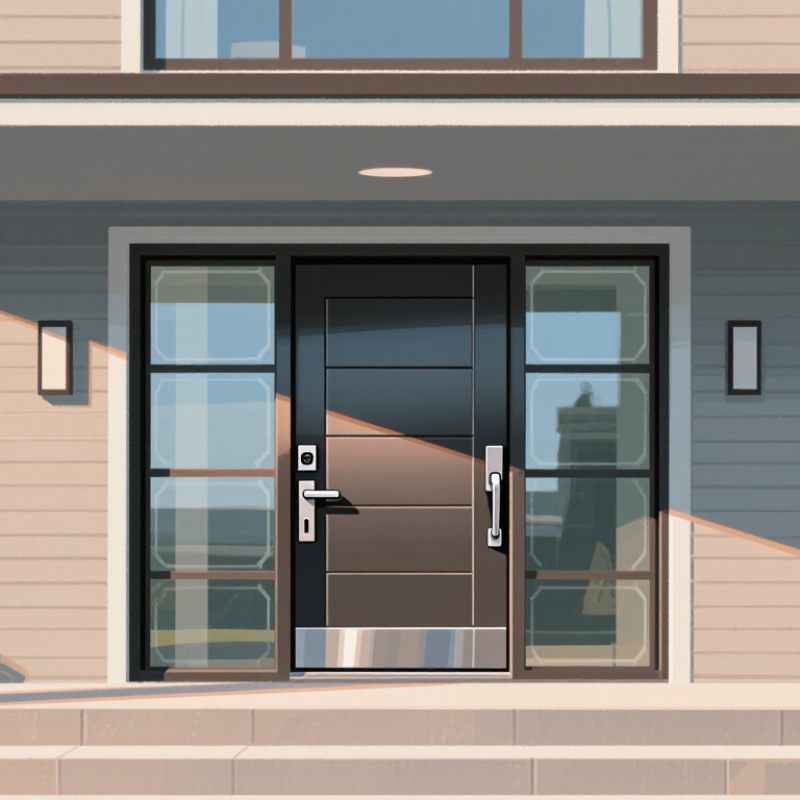
Before comparing aluminum entry doors, define what your entryway must handle every day. Measure the frame width, height, wall depth, and threshold carefully. Note whether the doorway faces harsh afternoon sun, wind-driven rain, street noise, or a busy walkway. These details shape choices such as weather seals, glazing, insulation, and hardware. A beautiful glass panel may brighten a dim hall, but it can reduce privacy. Think about that trade-off early.
Set priorities in practical terms. If the entrance gets strong sun, ask about finish durability and thermal performance. For a noisy street, compare tested sound-control options rather than relying on glass thickness alone. Check how the door operates with your available space, and consider who will use it, including children or anyone carrying groceries. A common planning miss is focusing on the door slab while overlooking the frame, sill, and installation. Even a well-made door can perform poorly if those parts are not suited to the opening. I would also leave room to reconsider: needs change, and the most secure-feeling option may not be the easiest to use.
Tips: Photograph the entry at different times of day. Record drafts, water marks, and traffic noise. Ask an installer to verify measurements and explain how the threshold will manage water.
Aluminum quality is more than a thick-looking frame. Ask for the alloy specification, finish type, and warranty conditions, then inspect corners and joins for clean, even workmanship. A powder-coated surface should feel smooth, not gritty or thin around edges. Hardware matters too: a heavy leaf needs hinges and a lockset suited to its weight. Small details show.
Frame design determines how the door meets the wall. Look for continuous weather seals, a well-supported threshold, and drainage paths that do not trap water. The ASHRAE Handbook—Fundamentals lists aluminum’s thermal conductivity at about 237 W/(m·K); alloy and profile details can vary. A thermal break separates the inner and outer frame sections with a less-conductive material, reducing heat flow through the metal. The U.S. Department of Energy estimates that windows account for 25–30% of residential heating and cooling energy use. That figure is not door-specific, but it shows why glazed areas and frame performance deserve attention.
Check the label. Compare whole-door U-factor ratings, not just claims about the insulated panel. Lower U-factor generally means less heat transfer. Ask for test documentation covering the full assembly, including glazing, frame, and threshold. Stand near the sample on a cold day if possible; a beautiful finish cannot reveal every draft. I still find specifications confusing, and that is a fair reason to request the actual rating sheet.
A premium aluminum entry door should be judged as a complete system, not by its metal finish alone. Aluminum conducts heat, so look for a continuous thermal break between the interior and exterior frame, plus an insulated door core. Compare published U-factor values; lower figures generally indicate less heat transfer. If the door includes glass, check the glazing performance too. A strong panel can still lose energy through a poorly insulated glass insert.
Weather resistance shows up at the edges. Inspect the weatherstripping, corner joints, sill, and adjustable threshold. These details help limit drafts and wind-driven rain, especially where heavy rain regularly meets strong gusts. Ask how the door assembly was tested, and whether the rating applies to the exact size and configuration you plan to buy. Installation matters just as much. Even a well-rated door may leak if the frame is out of square. Small gaps count.
For security, check the frame reinforcement, hinge attachment, strike plate, and lock compatibility—not just the number of locking points. A multipoint system can distribute force along the door edge, but it needs correct alignment to work smoothly. Try the handle and deadbolt in person; stiffness may signal adjustment needs, not extra protection. I would not treat any single rating as a guarantee. Compare documented test results, warranty terms, and the installer’s method, then weigh them against your climate and entry layout. A little doubt is useful here.
| Comparison Area | What to Look For | Useful Data or Benchmark | Why It Matters | What to Verify Before Buying |
|---|---|---|---|---|
| Whole-door energy efficiency | Thermally broken aluminum framing, insulated door panels, and low-emissivity insulated glazing where the door includes glass. | Compare the whole-unit NFRC U-factor in Btu/(h·ft²·°F). Lower values indicate less heat transfer. Roughly 0.20–0.30 can be a useful target range for a high-performance insulated assembly, but actual results vary by design and size. | Aluminum conducts heat readily; a thermal break separates interior and exterior frame surfaces and can reduce heat flow and interior condensation risk. | Request the NFRC-rated U-factor for the complete door, including its frame and glazing—not just the center-of-glass value. Check local energy-code requirements. |
| Glazing and solar performance | Double- or triple-pane insulated glass with low-E coatings and a durable edge seal; choose the solar heat gain coefficient (SHGC) to suit the climate and orientation. | NFRC labels report U-factor and SHGC. SHGC ranges from 0 to 1; a lower value admits less solar heat. The appropriate value depends on climate, shading, and whether winter solar gain is desirable. | Glazing can be the least insulating part of an entry door, while solar gain can affect cooling loads and comfort. | Compare certified whole-door ratings and confirm the selected glass meets applicable safety-glazing rules. Safety glazing is not automatically burglary-resistant. |
| Air leakage | Continuous compression weatherstripping, well-sealed corners, a tight threshold, and accurate installation. | Ask for tested air-leakage data and the test pressure. A rating at or below 0.3 cfm/ft² at 1.57 psf is a commonly used screening benchmark; confirm the applicable local program or code criteria. | Air leakage can cause drafts and energy loss even when the door panel itself is well insulated. | Request test documentation for the complete door assembly and confirm that installation details preserve the tested seal. |
| Rain and water resistance | Weatherstripping on the head and jambs, a properly designed sill, effective drainage, and flashing integrated with the wall opening. | Look for water-penetration test results, such as testing under ASTM E547, with the reported pressure and configuration stated. | Resistance depends on the door, sill, seals, installation, and exposure; a door rating alone cannot prevent water entry through poor flashing. | Match the tested water-pressure rating to the site’s wind-driven-rain exposure. Review sill, drainage, and flashing instructions. |
| Wind and structural performance | A frame, panel, glass, and hardware system rated for the intended wind exposure; consider a suitable impact-rated assembly where required. | Ask for structural test data, such as ASTM E330 results, including the tested design pressure and door size. Requirements vary by building location and code. | Wind pressure can stress the frame, hinges, locks, and glass; coastal and storm-prone areas may have additional code requirements. | Confirm the tested assembly matches the ordered size, glazing, hardware, and installation conditions. Check local permits and wind-zone requirements. |
| Locking and forced-entry resistance | A reinforced lock area, sturdy hinges, a properly installed deadbolt or multipoint lock, and secure anchoring of the frame. | There is no single universal security rating for all entry doors. Prefer independently tested forced-entry performance where available; compare the exact test standard and result. | Security depends on the complete assembly and installation, not only the lock. A strong lock cannot compensate for weak frame anchoring. | Check lock engagement points, strike-plate reinforcement, hinge security, fasteners, and the manufacturer’s documented test scope. |
| Glass security and safety | For glazed doors, consider laminated glass when added resistance to penetration is desired; use appropriate safety glazing in hazardous locations. | Safety-glazing compliance and forced-entry resistance are different properties. Check applicable requirements, such as ANSI Z97.1 or CPSC 16 CFR Part 1201, and request separate security test evidence if needed. | Safety glass is designed to reduce injury risk when broken; it should not be assumed to provide a specified level of burglary resistance. | Confirm the exact glass make-up, safety-glazing marking, and any tested forced-entry rating for the complete door. |
| Finish and corrosion resistance | A finish suitable for the local climate, with documented preparation and coating performance; use more frequent cleaning in coastal or industrial environments. | Request the finish specification and any applicable coating or corrosion-test documentation. Salt exposure, pollutants, and maintenance affect service life. | Aluminum does not rust like steel, but its finish and hardware can still corrode or deteriorate under harsh exposure. | Review care instructions, finish warranty terms, approved cleaners, and whether coastal exposure is covered. |
| Installation and final selection | Professional installation with a plumb, square frame, continuous perimeter sealing, correct anchoring, and wall-system flashing. | Compare the complete installed specification: certified ratings, door dimensions, glazing, sill, hardware, and installation details. | Installation defects can undermine energy, water, wind, and security performance. | Before ordering, check local code, exposure conditions, warranty coverage, lead time, and the installer’s written scope. |
| Note: The numerical ranges and benchmarks above are comparison aids, not guarantees or universal code limits. Performance depends on the specific door assembly, size, options, test method, climate, and installation. Request current, third-party test or certification documents for the exact configuration being considered. | ||||
A premium aluminum entry door should fit the house, not just look impressive in a showroom. Choose a style that works with the opening and nearby architecture: a simple panel can suit a modern facade, while narrow glass inserts soften a more solid design. Measure the frame, swing clearance, and wall depth before settling on a configuration. Small details matter. A wide sidelight may brighten a dim hallway, but it can reduce privacy unless the glass is textured or partially obscured.
Finish affects both appearance and upkeep. Compare samples outdoors, where direct sun can make a neutral tone look warmer or cooler. In coastal or rainy locations, ask about the finish’s corrosion resistance and recommended cleaning routine. Glazing also deserves close attention: consider privacy, daylight, and insulation together, and check the glass performance figures rather than relying on vague claims. A clear pane can look beautiful. It may also reveal more of the entry than you intended.
Hardware should feel comfortable and operate smoothly, with hinges, handles, locks, and threshold selected as a compatible set. Check handle height and door weight, especially for frequent daily use. It is tempting to choose the boldest finish first; that is often the choice worth reconsidering. A sample beside your existing exterior trim may change your mind. Ask the installer how the door will be sealed and adjusted, since even excellent components can perform poorly when the fit is careless.
Choose a style, finish, glazing, and hardware configuration—with thermal performance in mind.
How to use this chart: U-factor measures heat transfer; a lower value indicates better insulation. These are ENERGY STAR Version 7.0 maximum eligibility thresholds for residential doors, not ratings for a specific product. When comparing aluminum door options, check the whole-door NFRC-rated U-factor, since the frame, glazing, and configuration all affect performance. Select the style, finish, and hardware to suit your home, then confirm the chosen glazing meets your thermal goals.
Source: ENERGY STAR Version 7.0 residential door criteria. U-factor in Btu/(h·ft²·°F).
Before comparing finishes, verify the door’s certifications and test reports. Match the documents to the exact model, size, and glazing option you plan to order. Check performance ratings for air leakage, water resistance, and structural strength, and confirm they suit your climate and exposure. A polished certificate is not enough. Ask who issued it and when the product was tested.
Installation can make a strong door perform poorly. Request written installation requirements and confirm the installer will follow them, including proper sill support, flashing, and perimeter sealing. Look closely at the opening before ordering; an uneven threshold can lead to drafts or water entry. Warranty terms matter, too. Read coverage for finish, hardware, and labor separately, and note exclusions for coastal exposure or improper maintenance. The fine print is easy to miss.
Tips: Compare the full installed cost, not just the door price. Include delivery, removal, framing repairs, hardware, finishing, and future upkeep. Get an itemized quote and clarify who handles unexpected repairs. I would also keep the test documents, installation photos, and signed warranty together. It takes a few minutes, and you may be glad you did.
Measure the frame width, height, wall depth, and threshold. Check swing clearance too. An installer can verify your measurements.
Note afternoon sun, wind-driven rain, street noise, and daily foot traffic. Photograph the entry at different times. Small clues matter.
Yes, glazing can bring daylight into a dim hallway. Clear glass may also reduce privacy. Textured or partly obscured glass can help.
Compare privacy, daylight, insulation, and tested performance figures together. Glass thickness alone does not tell the whole story.
View samples outdoors beside your existing trim. Sunlight can shift how a neutral color looks. I might be overthinking the shade, but samples can change your mind.
Check that the handle feels comfortable and the door moves smoothly. Consider door weight, handle height, hinges, locks, and threshold as one compatible set.
Ask how the frame, sill, seals, and threshold will be fitted. Look for existing drafts or water marks. A good door can still perform poorly when installation is careless.
Ask about finish durability, corrosion resistance, and cleaning recommendations. I would not assume every finish needs the same care. Check the details.
Choosing a Premium Aluminum Entry Door in 2026 starts with understanding your entryway, climate, daily use, and priorities for comfort, appearance, and protection. Assess the quality of the aluminum, the strength and design of the frame, and whether thermal breaks help limit heat transfer. Compare energy performance, resistance to rain and wind, and available security features to find a door suited to your home’s conditions.
Next, select a style, finish, glazing, and hardware configuration that complements your home while meeting practical needs for light, privacy, and ease of use. Before deciding, review relevant product certifications, installation requirements, warranty coverage, and the total cost, including fitting and upkeep. Considering these factors together can help you choose a durable, attractive entry door that performs well over time.
Luxfront