Why Choose an Aluminium Front Door?

Time:2026-10-12 Author:Isabella
0%

Choosing an Aluminium Front Door is a practical decision, not merely a style preference. It can create a clean entrance with slim frames, strong security, and dependable weather resistance. In a busy family home, that matters. Muddy shoes, delivery parcels, rain, and repeated daily use quickly expose weak materials.

Fenestration consultant Richard Hayward explains, “A good entrance door should protect the building before it tries to impress the visitor.” This principle keeps the discussion grounded. Aluminium does not easily warp like untreated timber, and quality powder coating can retain its finish for years. Its strength also supports larger glass panels without making the frame look heavy. That can bring daylight into a dark hallway.

Still, aluminium is not automatically the perfect answer. Poor thermal breaks may create cold internal surfaces. Cheap hardware can loosen. Dark finishes may also show dust and scratches more clearly. These details are easy to overlook.

A well-designed Aluminium Front Door should include a thermally broken frame, secure multi-point locking, accurate installation, and tested seals. Ask about drainage paths and warranty terms. Ask who will adjust the hinges later.

The material feels solid.

Yet performance depends on the complete system. A beautiful door can disappoint when the threshold leaks or the frame is fitted badly. This guide examines the real benefits, possible limitations, energy performance, security features, maintenance needs, and design choices. It aims to help homeowners choose with confidence, while leaving room for one honest thought: the most expensive door is not always the best door.
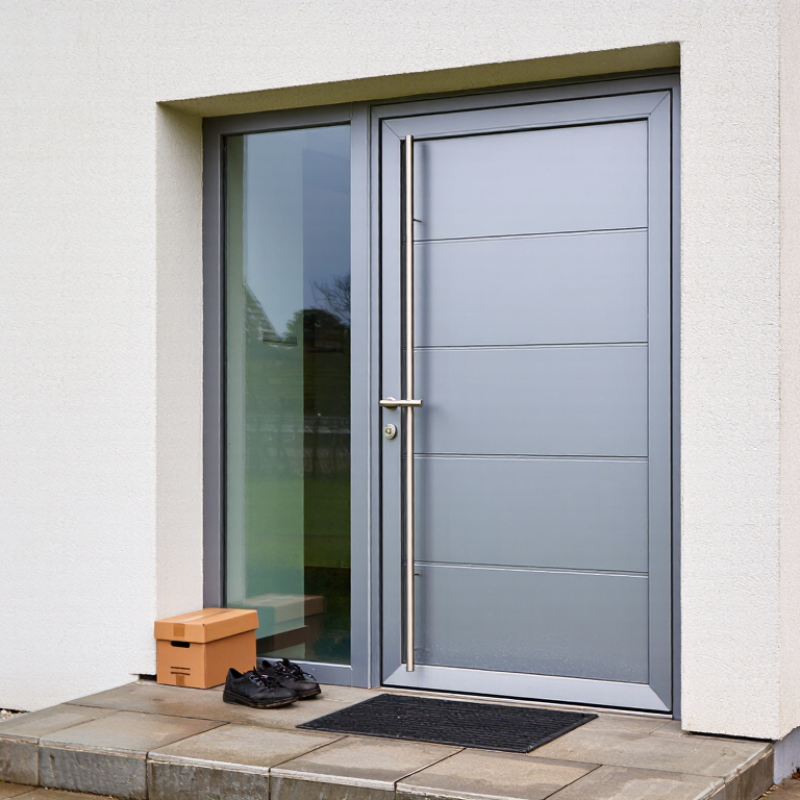
Why Choose an Aluminium Front Door?

What Is an Aluminium Front Door?

What Is an Aluminium Front Door?

An aluminium front door is an entrance system made with aluminium profiles, an insulated panel, glazing, hinges, seals, and locking hardware. Its frame is usually thermally broken. This means an insulating barrier separates the inner and outer metal surfaces. The detail matters. Without it, cold aluminium can create condensation and heat loss around the frame.

Modern aluminium doors can support double or triple glazing, weather seals, and multi-point locking systems. They are also stable in changing temperatures. Unlike some materials, aluminium resists swelling, warping, and insect damage. In daily use, that can mean a door that closes smoothly after years of rain and sunlight. However, poor installation can still cause drafts. The material cannot correct careless surveying.

The International Aluminium Institute reports that recycled aluminium needs about 5% of the energy required for primary aluminium production. It also states that roughly 75% of all aluminium ever produced remains in use. These figures support aluminium’s long service life and recycling potential. Yet primary aluminium production is energy-intensive. That point should not be ignored. A responsible specification should consider recycled content, local manufacturing, thermal performance, and the door’s expected lifespan. A slim frame may look elegant, but glass area, orientation, and seal quality often influence comfort more than appearance.

How Aluminium Front Doors Are Designed and Manufactured

Why Choose an Aluminium Front Door?

How Aluminium Front Doors Are Designed and Manufactured

An aluminium front door begins with accurate measurements, not a catalogue image. Designers assess opening size, wall condition, drainage, wind exposure, glazing, and daily use. A 2023 International Energy Agency report states that buildings consume about 30% of global energy. This makes thermal performance important, even at the entrance.

Manufacturers cut aluminium profiles using computer-controlled equipment. They then assemble frames with thermal breaks, reinforced corners, durable gaskets, and secure hardware. Thermal breaks reduce direct heat transfer through the metal. Double or triple glazing can improve the door’s overall insulation. Factory powder coating adds colour and surface protection, while careful quality checks inspect alignment, seals, and drainage paths. Small errors matter. A beautiful door can still admit drafts if the threshold is poorly installed.

Tips: Ask for the door’s U-value, air-permeability results, and glazing specification. Check whether the frame includes a continuous thermal break. The International Aluminium Institute reports that recycling aluminium can save up to 95% of the energy required for primary production. Therefore, ask about recycled content and future recyclability. Do not overlook installation. On site, installers often find that uneven masonry causes more trouble than the door itself. A final adjustment may be necessary after seasonal movement.

Why Choose an Aluminium Front Door?

Aluminium front doors combine slim, strong frames with thermal-break technology, insulated panels, durable seals and high-performance glazing. These design features help reduce heat transfer while supporting long-term stability and low maintenance.

Typical whole-door U-value ranges in W/m²·K. Lower values indicate better thermal insulation. Actual performance depends on the frame profile, thermal break, panel, glazing, seals and installation quality.

How Aluminium Front Doors Are Designed and Manufactured

The process typically begins with engineered aluminium profiles that are cut and machined to size. A polyamide thermal break separates the inner and outer frame sections, while insulated panels or double- and triple-glazed units improve energy efficiency. Components are then assembled with precision hardware and compression seals before the surface is powder coated for durable colour and corrosion protection.

Key Benefits of Aluminium Front Doors

Why Choose an Aluminium Front Door?

Key Benefits of Aluminium Front Doors

An aluminium front door offers a clean, modern entrance without feeling fragile. Its strong frame supports large glass panels and slim sightlines. This can bring more daylight into a darker hallway. On site, a correctly fitted door should open smoothly and close with a firm, even seal.

Thermal performance is another practical benefit. Aluminium systems with thermal breaks can reduce heat transfer through the frame. Combined with suitable glazing and professional installation, they may help maintain steadier indoor temperatures. The result is often noticeable beside the front door on a cold morning. Still, no door solves poor insulation alone. Wall construction and fitting quality matter.

Security also depends on the complete door set, not aluminium alone. Look for robust hinges, tested locking hardware, and accurate alignment. The surface usually needs little attention beyond gentle cleaning. Powder-coated finishes can resist everyday weather, although scratches and neglected seals still require repair. Aluminium is also durable and recyclable, which supports longer service life. That said, environmental claims should be checked carefully, because manufacturing energy and transport affect the overall impact. A thoughtful choice considers local weather, household use, and installer competence. Small details matter.

Comparing Aluminium Doors with Other Front Door Materials

Why Choose an Aluminium Front Door?

Comparing Aluminium Doors with Other Front Door Materials

Choosing a front door involves more than appearance. It affects security, insulation, maintenance, and daily comfort. Aluminium offers a slim frame with strong structural performance. This allows more glass without making the entrance feel bulky. A properly designed aluminium door can also resist warping, swelling, and cracking during changing weather.

Compared with timber, aluminium needs less repainting and does not absorb moisture. Timber still offers a warmer, more traditional character, which many homeowners value. However, neglected timber can develop peeling coatings or sticking edges. Aluminium usually provides better dimensional stability. It is not flawless. Poorly specified frames may feel cold, so thermal breaks and quality glazing deserve careful attention.

uPVC doors can provide good insulation at a lower initial cost. Their thicker profiles, however, may reduce the visible glass area. Steel doors are impressively strong, but exposed finishes can eventually show scratches or corrosion. Aluminium sits between these materials, combining a clean appearance with useful durability.

In my experience, installation quality often matters as much as the frame itself. A badly fitted door can leak air, drag on its hinges, or weaken security. Check the locking system, threshold design, drainage details, and installer’s experience before choosing. That practical step is easy to overlook.

How to Choose and Maintain an Aluminium Front Door

Why Choose an Aluminium Front Door?

How to Choose and Maintain an Aluminium Front Door

An aluminium front door offers a slim frame, strong security, and steady performance in changing weather. The International Energy Agency’s 2023 Global Status Report states that buildings consume about 30% of global final energy. Your door matters, especially when its frame and glass are poorly specified. Choose a thermally broken frame, low-emissivity glazing, and compression seals. The U.S. Department of Energy explains that metal frames conduct heat quickly, while thermal breaks reduce this transfer. Ask for tested U-values and air-leakage results, not only attractive finish samples.

Check the installation carefully. The threshold should shed rain outward, and the frame must sit squarely within the opening. A slight gap can create a cold draught. I once focused too much on the powder coating and missed a badly adjusted latch. That mistake was expensive in comfort, not necessarily in repairs. Open and close the door several times before accepting the work. Listen for rubbing. It should feel controlled.

Maintenance is simple, but easy to neglect. Clean the frame twice yearly with mild soap, clean water, and a soft cloth. Rinse coastal salt more often. Avoid abrasive pads and strong solvents; they can dull the protective finish. Inspect seals, hinges, drainage holes, and the locking points each season. The QUALICOAT quality scheme recommends regular cleaning suited to local exposure. Its guidance also warns that neglected deposits can damage coated surfaces. I would still check the installer’s care instructions, because “low maintenance” never means maintenance-free.

Why Choose an Aluminium Front Door? - How to Choose and Maintain an Aluminium Front Door

Evaluation Dimension Relevant Data or Performance Information What to Look For When Choosing Maintenance Guidance
Material strength Aluminium is lightweight but has a high strength-to-weight ratio, allowing slim profiles and large glazed areas. Check the profile thickness, frame design, door size limits and hardware load rating. Avoid slamming the door and adjust hinges or locking points if the panel begins to drop or rub.
Thermal performance Thermally broken aluminium door systems can typically achieve whole-door U-values of approximately 0.8–1.8 W/m²K, depending on glazing, panel construction and size. Request the tested or declared whole-door U-value rather than relying only on the frame value. Lower U-values generally indicate better insulation. Keep weather seals clean and correctly positioned so warm or conditioned air is not lost through gaps.
Weather resistance Performance depends on the door’s air permeability, watertightness, wind resistance and installation quality. Look for independently tested performance classifications and a threshold suitable for the local exposure conditions. Clear drainage channels and check the threshold after heavy rain. Do not block drainage openings.
Corrosion resistance Aluminium naturally forms a protective oxide layer. Anodised or powder-coated finishes provide additional surface protection. Choose a finish appropriate for coastal, industrial or high-moisture environments and confirm the finish warranty terms. Wash the surface with clean water and a mild, pH-neutral detergent. Avoid abrasive pads, strong acids and alkaline cleaners.
Expected service life A well-designed and properly maintained aluminium door can commonly provide 30 years or more of service, although hardware and finishes may require earlier attention. Review the expected life of the frame, finish, seals, hinges, cylinder and locking mechanism separately. Inspect the complete door at least twice a year and replace worn seals or damaged hardware promptly.
Security Security is determined by the complete door assembly, including the frame, hinges, cylinder, multipoint lock, glazing and installation. Consider multipoint locking, laminated or security-rated glazing, hinge protection and independently tested door-set performance. Lubricate compatible moving parts according to the lock manufacturer’s instructions and keep keys and cylinders free from dirt.
Finish and appearance Powder-coated and anodised finishes are available in a wide range of colours and textures and do not normally require repainting. Check colour consistency, gloss level, surface quality and whether replacement touch-up materials are available. Clean according to the finish supplier’s instructions, normally every 3–6 months or more often in polluted or coastal areas.
Glazing and daylight Double or triple glazing can improve insulation, while laminated or toughened glass can improve safety and security. Balance visible light, solar control, privacy, acoustic performance and thermal requirements. Clean glass with a non-abrasive solution and check that glazing gaskets remain flexible and firmly seated.
Environmental profile Aluminium can be recycled repeatedly without losing its basic material properties, reducing the need for primary material when recycled content is used. Ask for the recycled-content percentage and environmental documentation if sustainability reporting is important. Maintain the door for a long service life and recycle the frame through an appropriate metal-recycling route at end of use.
Installation quality Incorrect fitting can reduce security, insulation and weather performance even when the door itself is well designed. Use a competent installer and confirm correct alignment, fixing, sealing, threshold support and final adjustment. Recheck alignment, seals and fixings after the first few months and whenever the door becomes difficult to close.
Note: Performance figures are indicative ranges for modern residential aluminium door systems. Actual results vary according to the complete door assembly, dimensions, glazing, hardware, local climate and installation.

FAQS

What is an aluminium front door?

It is an entrance system made from aluminium profiles, glazing, seals, hinges, panels, and locking hardware. The frame usually includes a thermal break. This barrier reduces heat transfer and condensation.

Why is a thermal break important?

It separates the inner and outer metal surfaces. Without one, the frame can feel cold and lose heat. Condensation may also appear around the edges.

Can aluminium front doors improve home comfort?

They can help maintain steadier indoor temperatures with suitable glazing and proper installation. The difference may feel clear beside the door on a cold morning. But the door is not a complete insulation solution.

Are aluminium front doors durable?

Aluminium resists swelling, warping, insect damage, and changing temperatures. A well-fitted door may close smoothly after years of rain and sunlight. Still, scratches, worn seals, and poor adjustments need attention.

How secure is an aluminium front door?

Security depends on the complete door set, not aluminium alone. Choose strong hinges, tested locking hardware, accurate alignment, and firm seals. A strong frame cannot fix weak installation.

Can aluminium front doors include large glass panels?

Yes, their strong frames can support large double or triple-glazed panels. Slim sightlines may bring more daylight into a dark hallway. Glass specification still affects insulation and comfort.

What should be checked before buying one?

Ask for the U-value, air-permeability results, glazing details, and continuous thermal-break information. Check the opening, wall condition, drainage, wind exposure, and threshold. Measurements matter more than a catalogue picture.

Are aluminium front doors environmentally responsible?

Aluminium can be recycled repeatedly, and recycled material generally requires much less production energy. However, primary production remains energy-intensive. Transport and manufacturing should not be ignored. The environmental answer is not perfectly simple.

Conclusion

An Aluminium Front Door is a modern entrance solution made from lightweight yet strong aluminium frames, often combined with insulated panels and high-performance glass. Its design and manufacturing process can be tailored to different architectural styles, dimensions, colours, finishes, glazing options, and security requirements. Precision engineering helps create a door that is both visually appealing and reliable for everyday use.

Compared with timber, uPVC, or steel doors, an Aluminium Front Door offers an excellent balance of durability, thermal efficiency, low maintenance, and design flexibility. It resists warping, corrosion, and fading when properly finished, while quality seals and insulation can improve comfort and energy performance. When choosing one, homeowners should consider frame quality, thermal ratings, locking systems, glazing, installation, and overall style. Routine care is simple: clean the frame and glass regularly, keep drainage channels clear, and check hinges, seals, and hardware to help maintain smooth operation over time.

Isabella

Isabella

Isabella is a dedicated marketing professional with a sharp focus on driving brand growth and engagement through strategic content creation. With an extensive background in digital marketing, she combines her passion for storytelling with her keen understanding of industry trends to deliver......