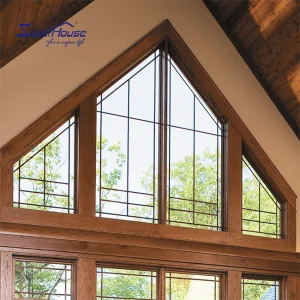
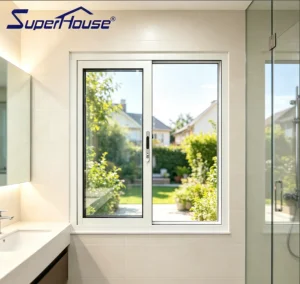
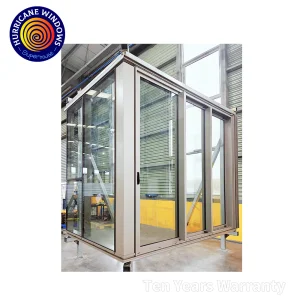
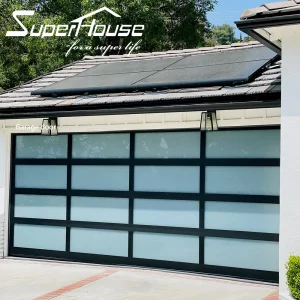
Explore our precision-engineered aluminum entrance doors, hurricane-rated impact systems, and thermal break fenestration product lines manufactured for global architectural integration.
Founded in 2007, Luxfront Architectural Doors Ltd. has established itself as a global benchmark in modern high-end door manufacturing. Utilizing a state-of-the-art 26,000 m² advanced production facility, our enterprise fuses 17 years of technical manufacturing heritage with 7 years of specialized international trade operations, generating over $21 million in annual export revenue. Luxfront caters predominantly to tier-one markets across North America, Western Europe, and Australia, delivering custom structural fenestration systems for boutique housing developers, luxury estate builders, commercial high-rise projects, and global architectural agencies.
Driven by market-leading architectural innovation, Luxfront's 45 dedicated R&D engineers introduced 110 original custom door designs last season alone. Working alongside a vetted network of 720 specialized raw material supply partners, uncompromising Quality Assurance remains central to our industrial ethos. A internal QA force of 32 certified inspectors oversees full-process sampling, Coordinate Measuring Machine (CMM) dimensional verification, structural strain analysis, and extreme weather-seal evaluations. Complete custom options are available, covering large-format pivot door structures, concealed multi-axis hinges, smart motorized access integration, integrated LED ambient profiles, and hyper-durable wood-veneer fluoropolymer aluminum finishes.
The international market for architectural aluminum entrance doors has undergone a structural shift from standardized commodity purchasing to highly customized, performance-driven structural engineering. Procurement officers, real estate conglomerates, and facade contractors are increasingly prioritizing custom Original Equipment Manufacturer (OEM) and Original Design Manufacturer (ODM) capabilities over off-the-shelf alternatives.
Driven by stringent regional building codes (such as Florida's High Velocity Hurricane Zone requirements and California's Title 24 energy efficiency mandates), North American developers demand extreme structural integrity. OEM entrance doors must feature heavy-gauge 6063-T6 aluminum alloys, Florida NOA-certified impact glass, and U-factors below 0.24 Btu/h·ft²·°F.
In Western Europe, environmental regulations emphasize carbon neutrality and ultra-low operational energy consumption. Key commercial requirements focus on Passive House (Passivhaus) certified thermal break systems utilizing Polyamide (PA66-GF25) thermal barriers, triple-glazing with argon fill, and total acoustic attenuation (STC ratings exceeding 42 dB).
Australian compliance hinges on AS2047 and AS1288 standards, mandating extreme water penetration resistance, deflection limits, and wind pressure handling up to 4500 Pa. Australian builders require corrosion-resistant anodized or QUALICOAT Class 2 powder coatings suited for intense coastal UV exposure.
To mitigate global supply chain volatility, enterprise buyers require manufacturers offering full vertical integration. Luxfront minimizes project risk by controlling the entire value chain—from initial billet extrusion and thermal barrier insertion to CNC milling, robotic seal application, and pre-shipment assembly verification.
Modern architectural entrance doors serve as the critical transition point between structural envelope safety, environmental shielding, and high-aesthetic facade design. Luxfront's engineering framework integrates three core technological pillars:
Uninsulated aluminum conducts heat rapidly, leading to major HVAC thermal loss. Our systems feature multi-cavity precision Polyamide (PA66-GF25) thermal breaks reinforced with 25% glass fiber. This structure breaks conductive thermal pathways, achieving frame thermal resistance values capable of meeting Net-Zero building criteria.
For coastal regions exposed to extreme storms and hurricanes, Luxfront utilizes heavy-wall extruded aluminum profiles (up to 3.0mm structural wall thickness). Integrated with SentryGlas® (SGP) laminated glass interlayers, our doors absorb impact energy without envelope breach, enduring cyclic pressure loads over 70 PSF.
Commercial and high-end residential entrances demand seamless access control integration. Our custom doors feature concealed multi-point motorized locking systems, biometric fingerprint scanners, facial recognition access, and automatic drop-down bottom weather seals, fully compatible with modern Building Management Systems (BMS).
Our 26,000 m² smart manufacturing facility incorporates advanced European-grade automated machinery lines, maintaining dimensional tolerances within ±0.1mm. Below is an overview of our end-to-end production workflow and core capital equipment:
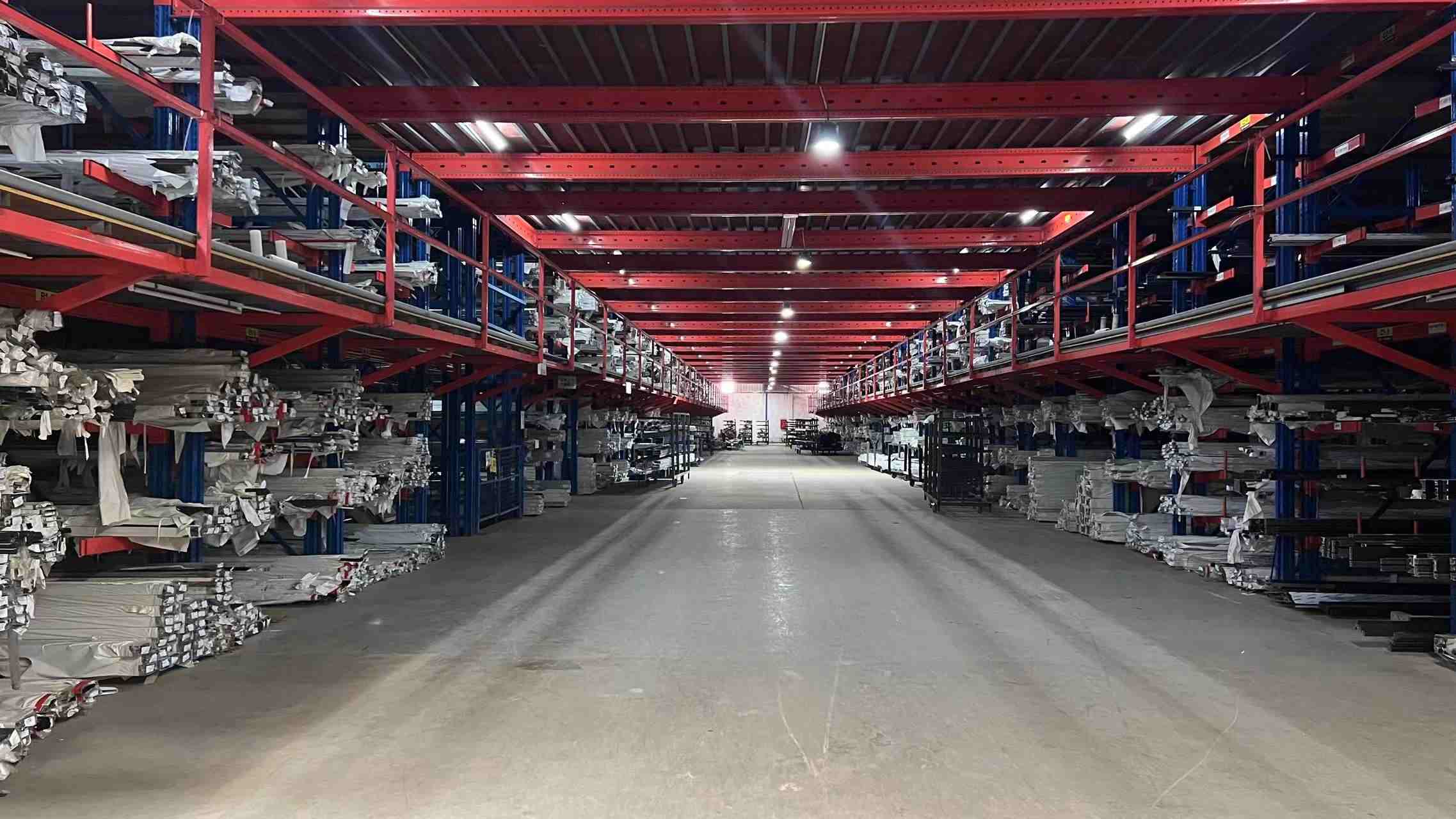 Raw Materials Procurement
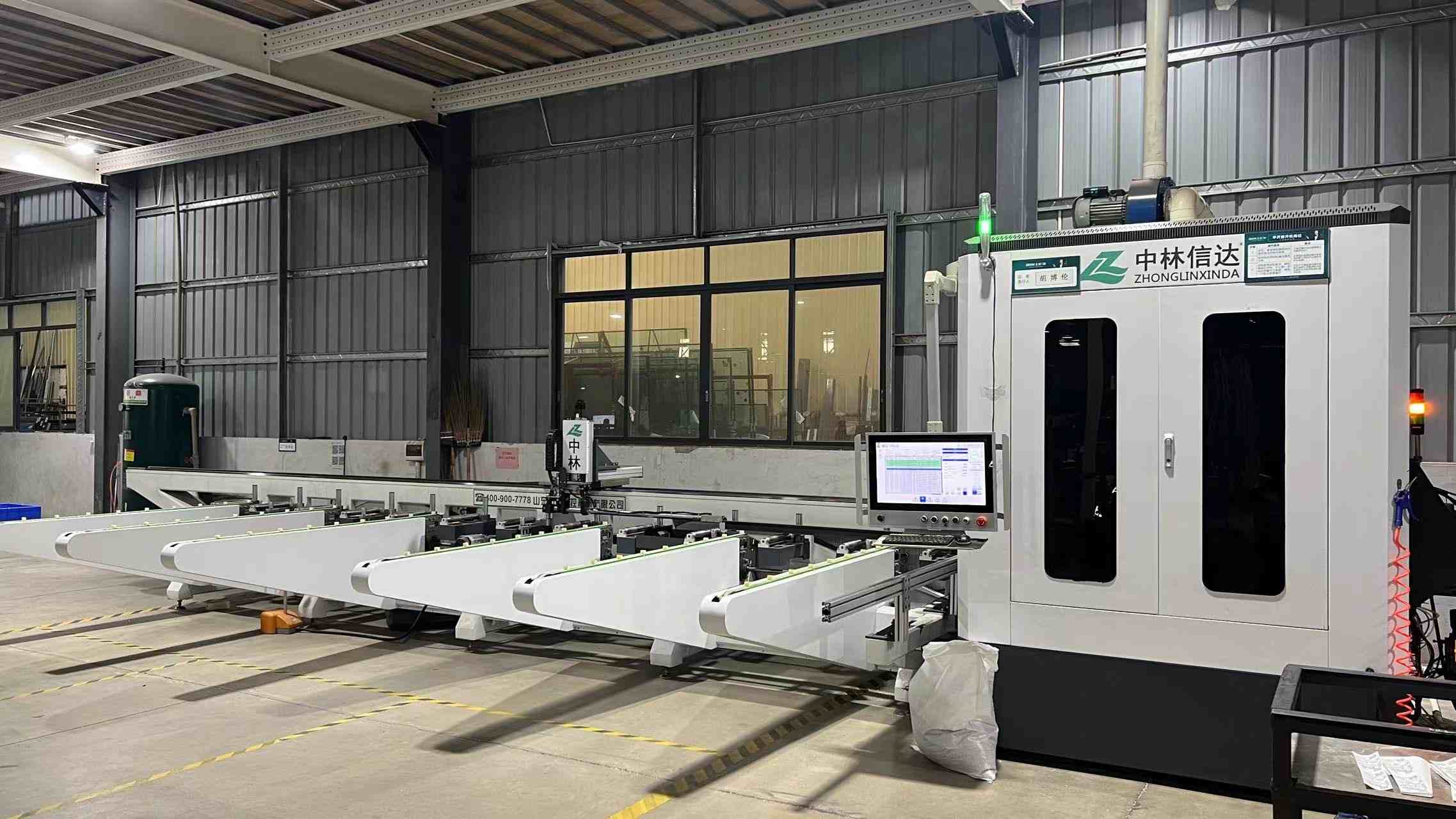 Precision Profile Cutting
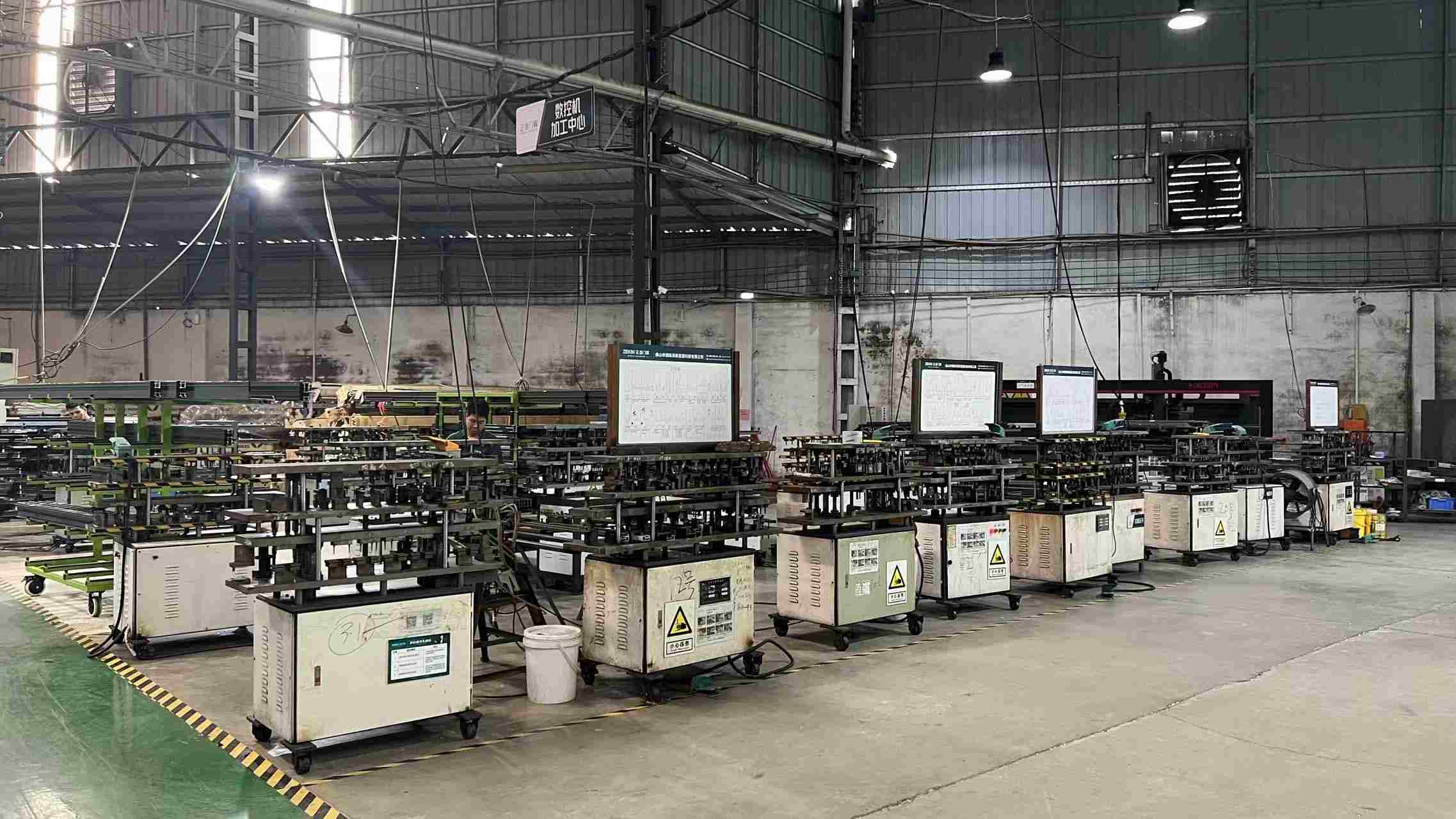 CNC Hardware Punching
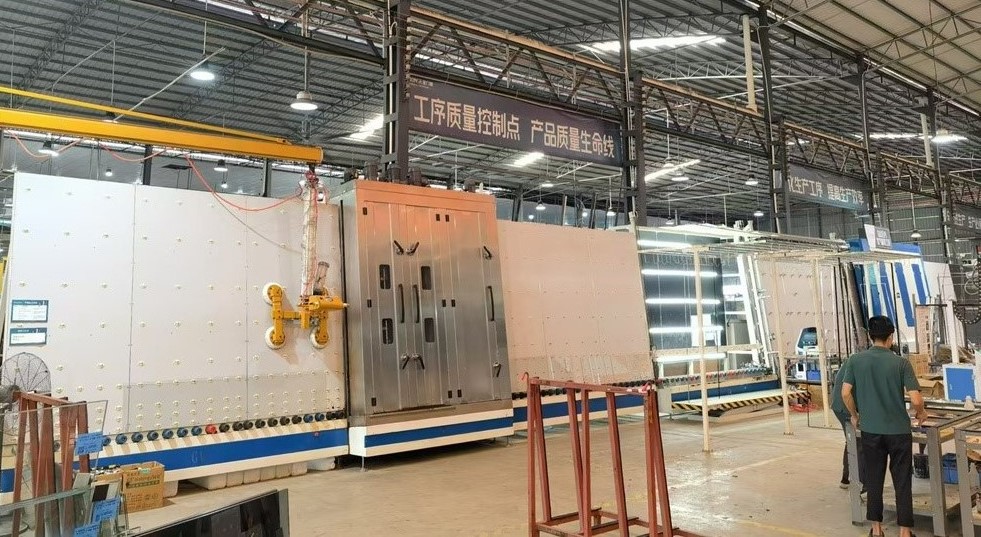 Hollow Profile Processing
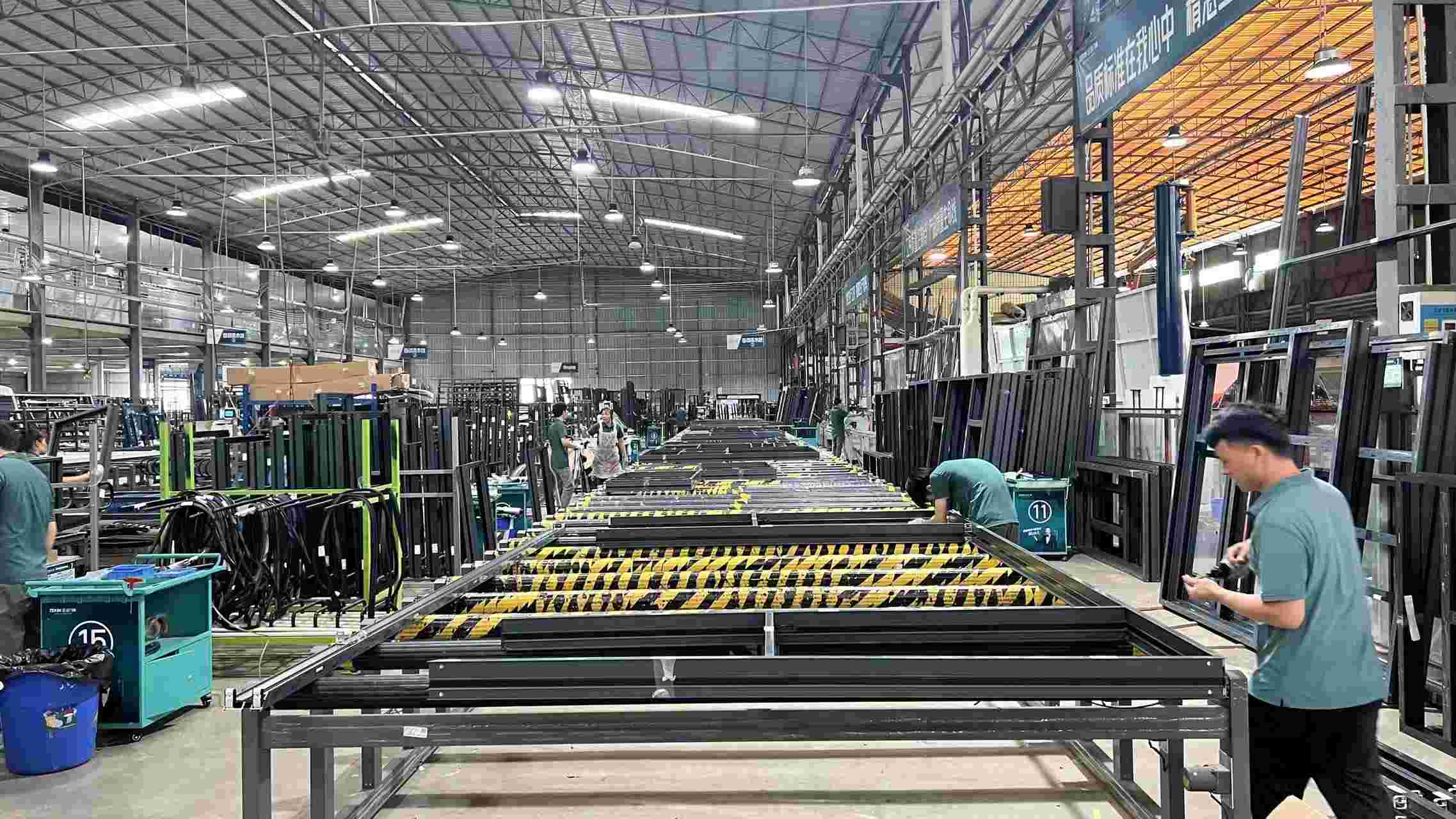 Automated Corner Gluing
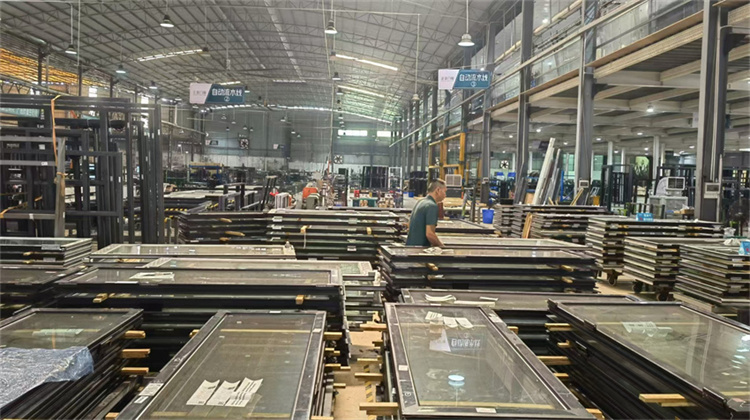 Structural Assembly Line
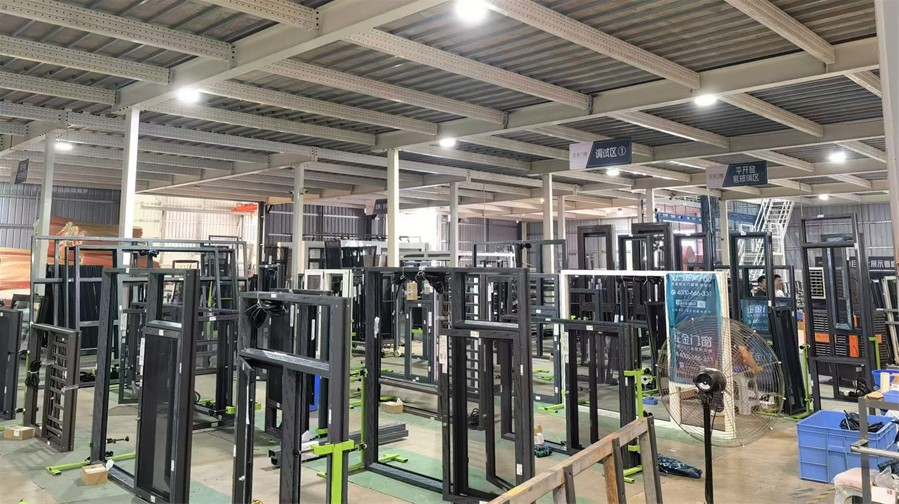 Mechanical Debugging
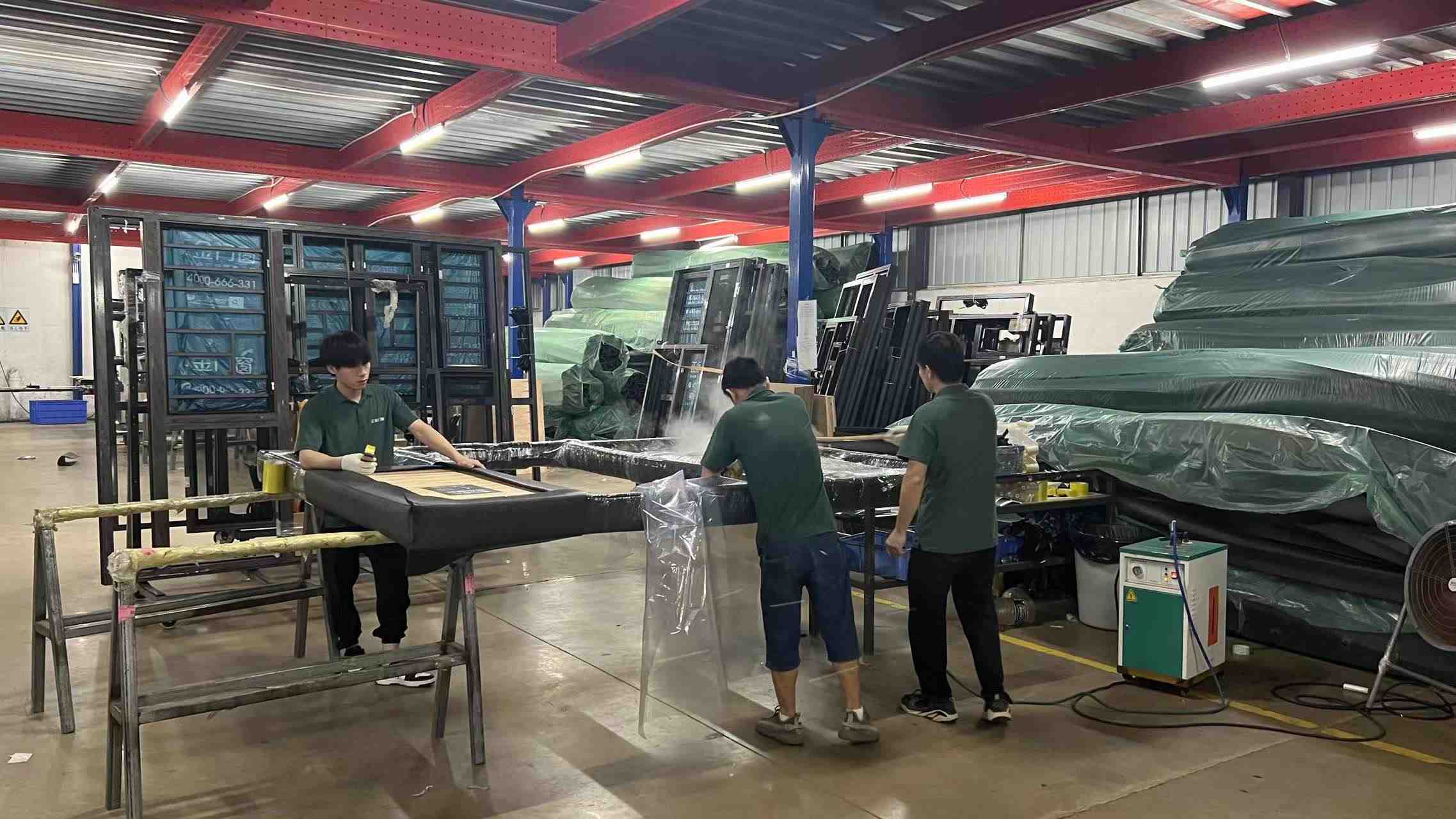 Export Protective Packing
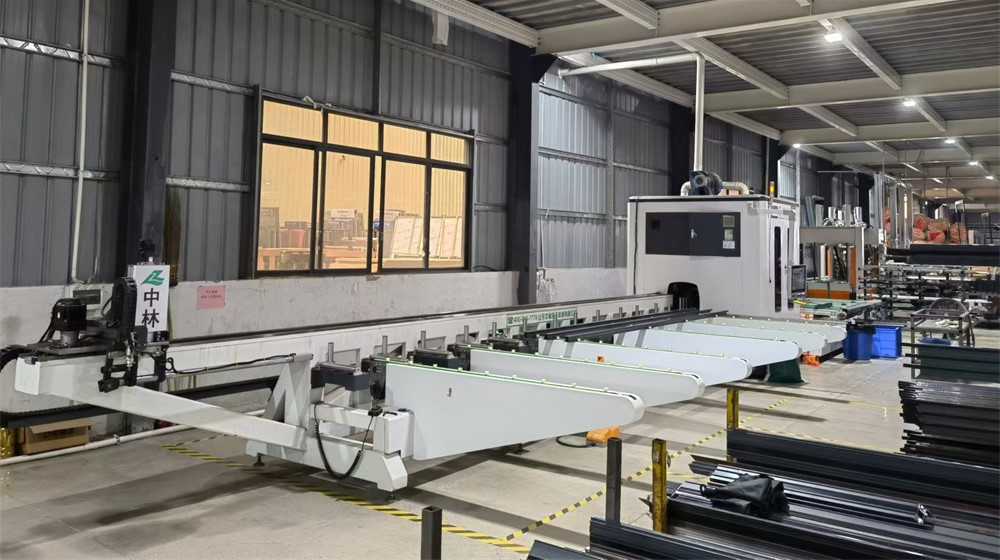 Laser Cutting Machine
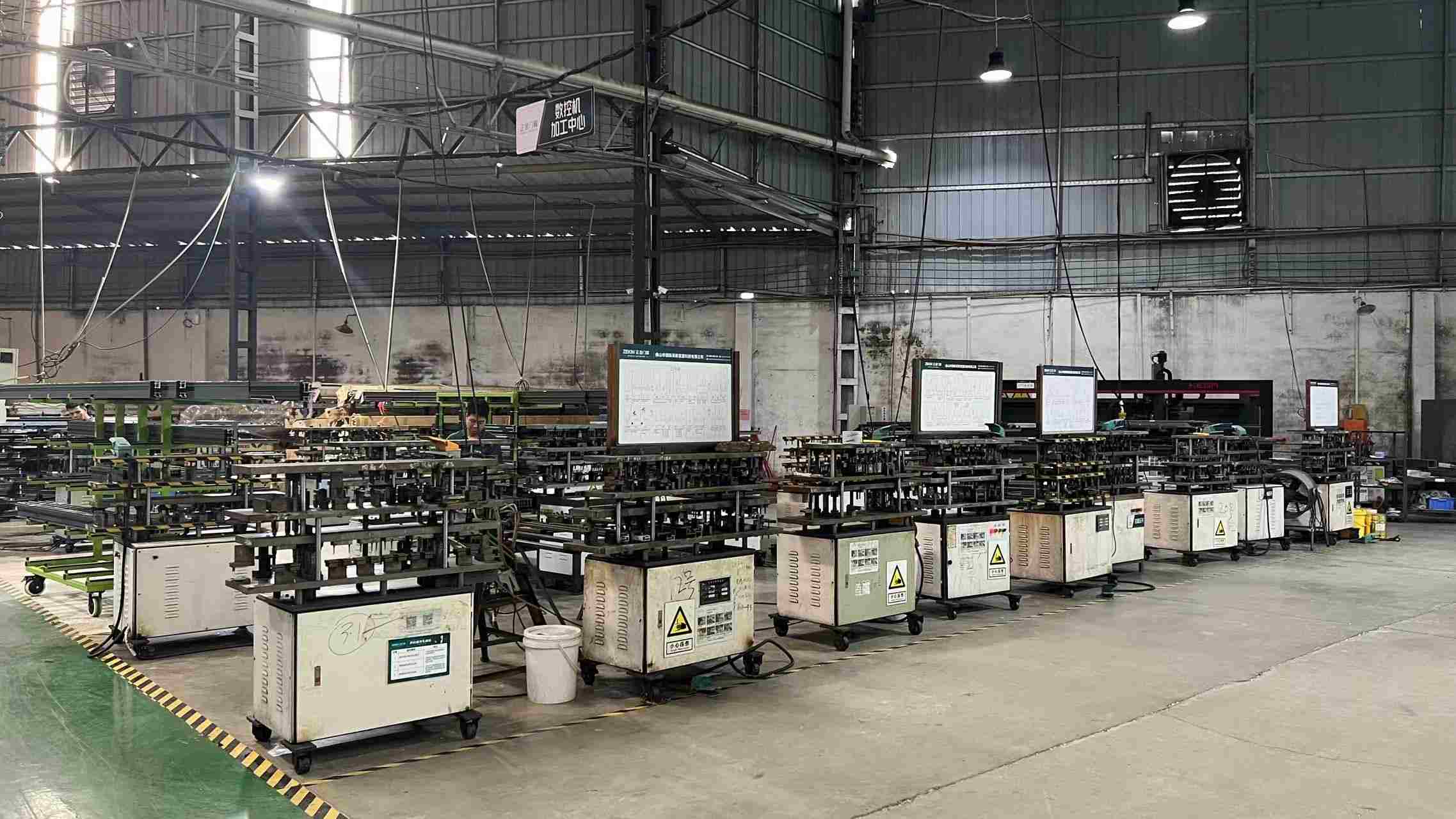 High-Speed Punching Machine
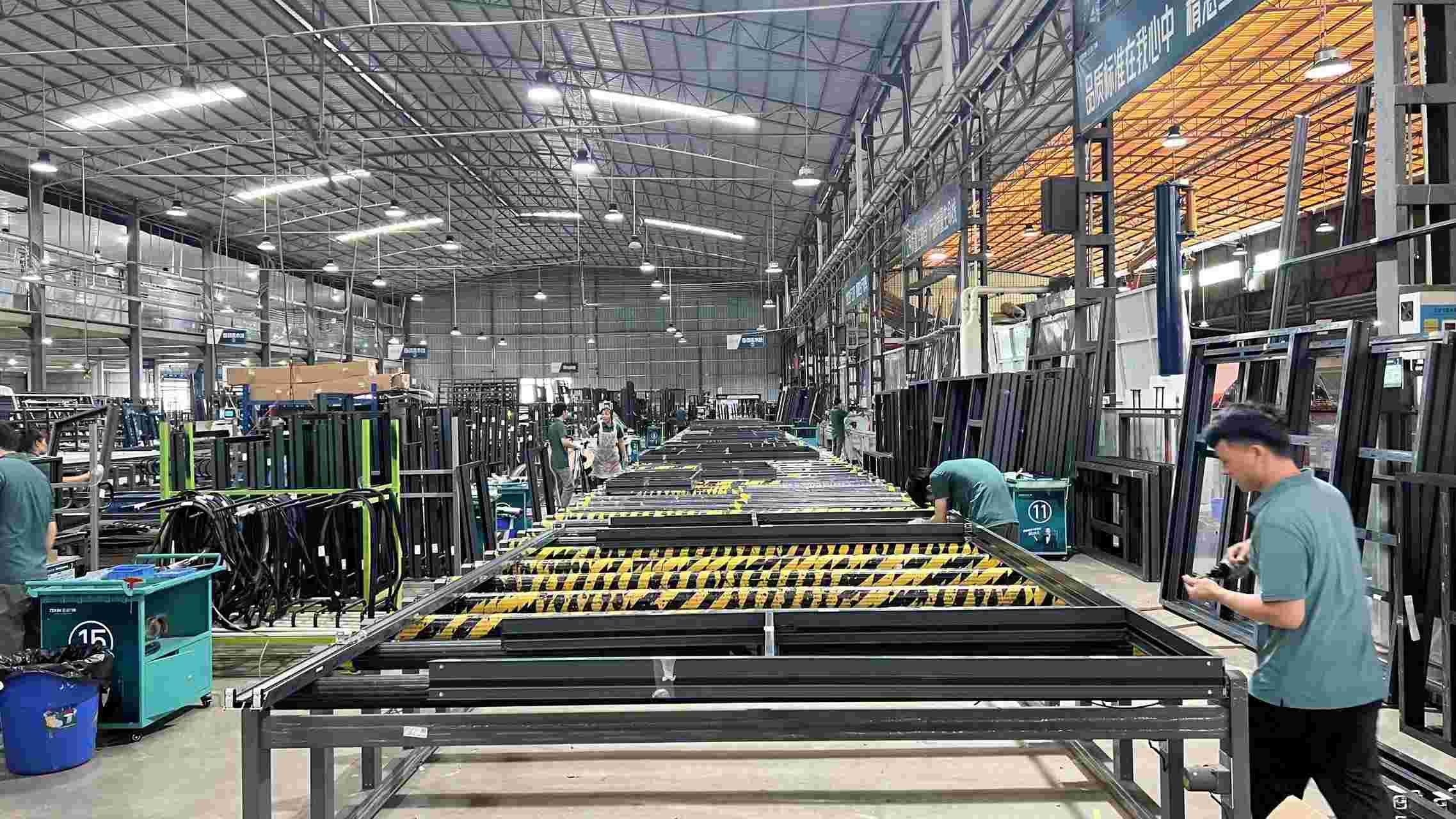 Continuous Assembly Line
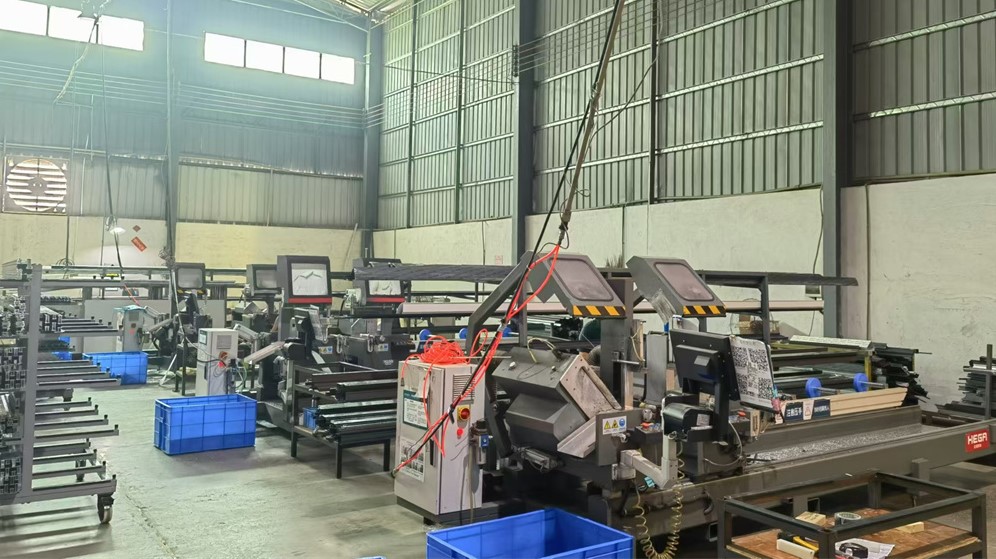 Double Head Sawing Machine
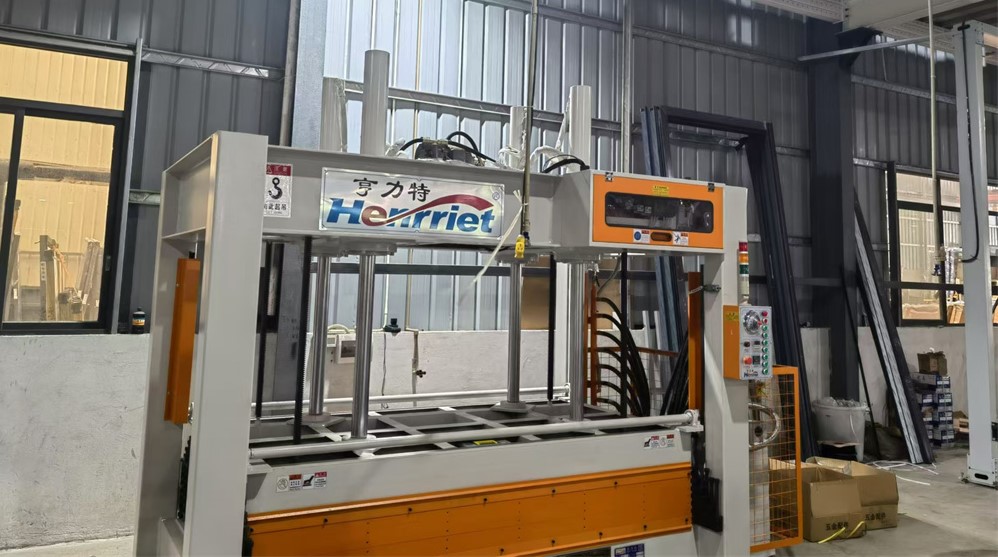 Corner Pressing Machine
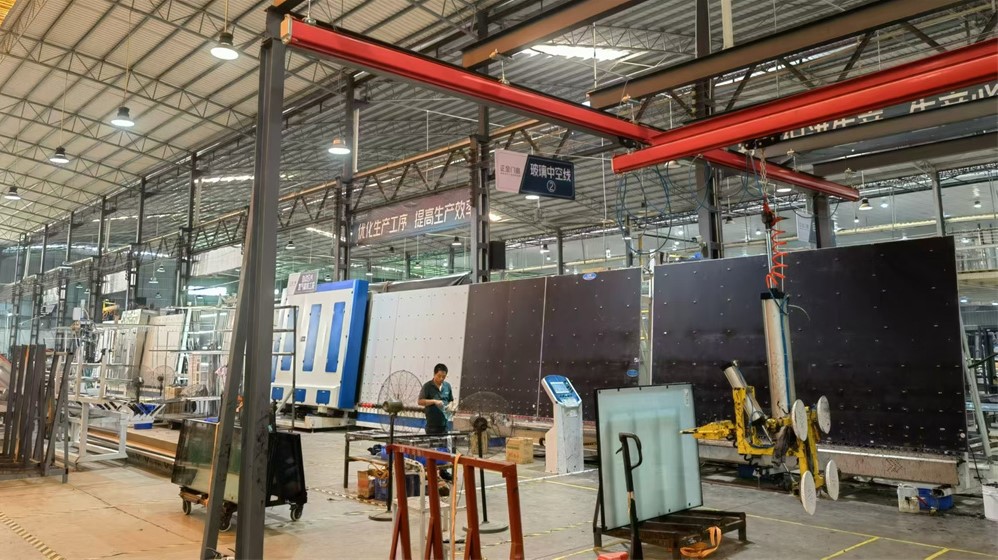 Insulated Glass Hollow Line
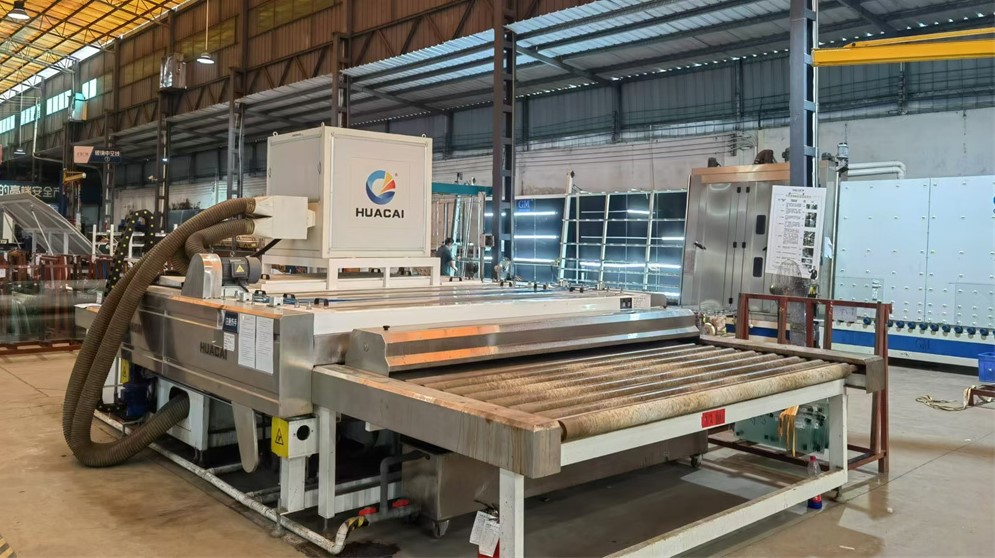 Glass Cleaning Machine
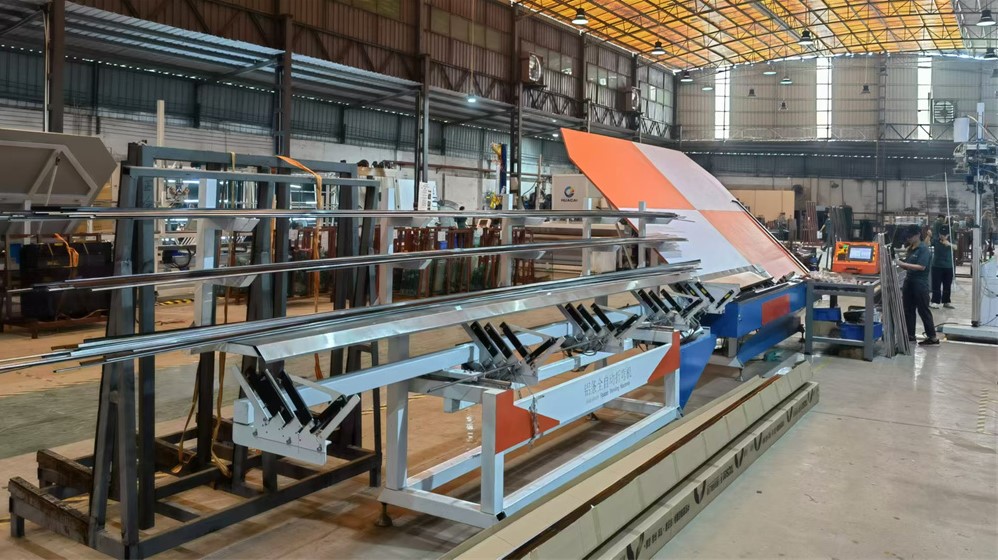 CNC Profile Bending Machine
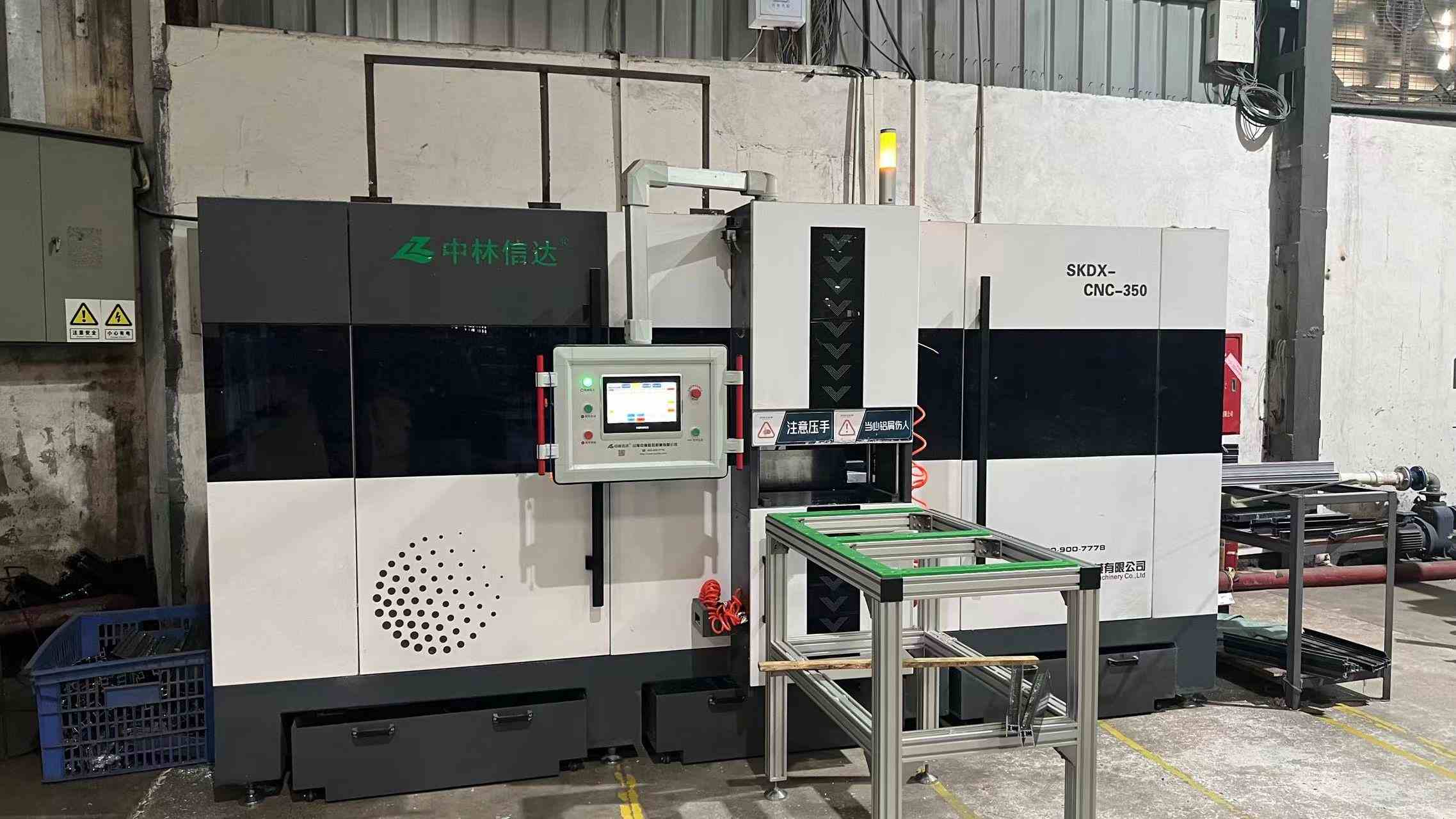 Automatic End Milling Machine
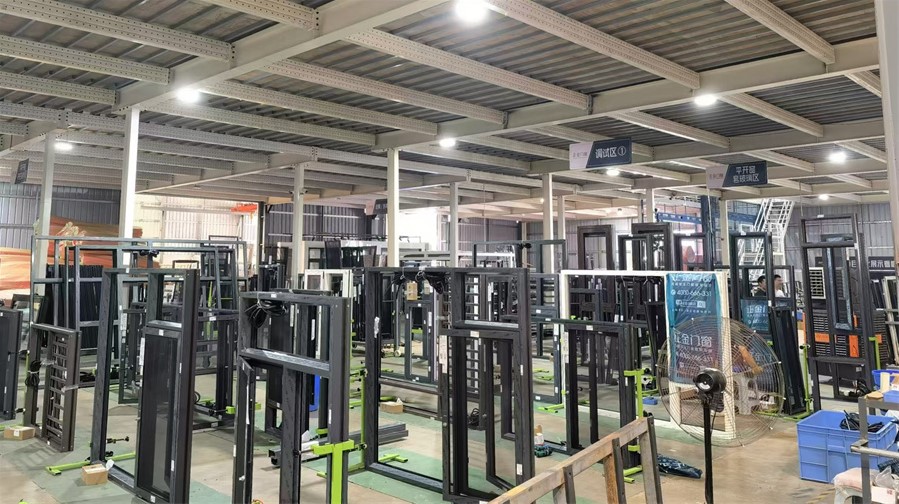 Final Debugging Station
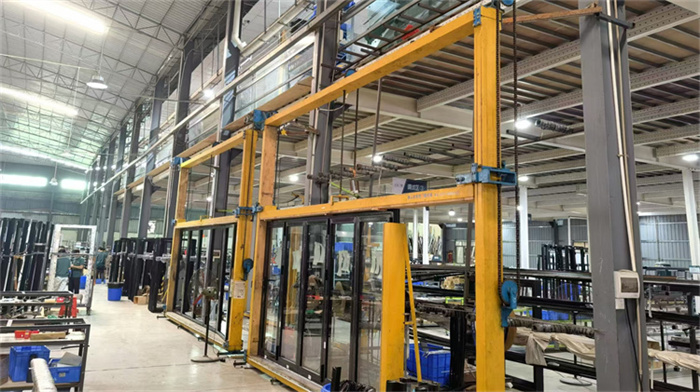 Vertical Debugging Frame
As architectural trends lean towards minimalist ultra-slim sightlines and massive oversized pivot configurations, Luxfront's R&D division continues to push the physical boundaries of aluminum structural engineering.
Traditional hinged doors face weight limitations when expanded beyond standard dimensions. Luxfront’s proprietary floor-pivot mechanism supports panel weights up to 500 kg (1,100 lbs) and panel heights up to 6 meters. Featuring adjustable hydraulic damping and 90-degree hold-open functions, these systems provide effortless fingertip operation for grandeur residential entrances.
Looking toward the future of extreme low-carbon architecture, Luxfront is integrating Vacuum Insulated Glass (VIG) options into customized OEM profiles. By creating a high-vacuum chamber between micro-spaced glass panes, frame-and-glass combinations achieve thermal performance equivalent to solid brick walls (U-values approaching 0.60 W/m²K).
Navigating international trade and regional construction codes requires absolute technical compliance. Luxfront’s products undergo rigorous testing by independent accredited laboratories to ensure smooth customs clearance and job site sign-off.
Detailed technical answers to common queries raised by architectural specifiers, developers, and commercial procurement partners.
Our custom OEM process begins with CAD/BIM drawing analysis provided by your design team. Luxfront’s 45-engineer R&D department produces detailed shop drawings, extrusion profile die recommendations, and hardware mechanical specs within 48 hours. Upon shop drawing approval and 3D prototype sign-off, we initiate raw material extrusion, CNC processing, thermal barrier joining, surface finishing, and full QA assembly checks.
Standard aluminum is highly conductive, resulting in rapid interior heat gain or loss and severe condensation issues. Thermal break aluminum incorporates a structural polyamide insulator (PA66-GF25) between inner and outer extruded aluminum profiles. This cuts thermal bridging by up to 70%, lowering interior energy loads, mitigating condensation risk, and achieving U-factors compliant with modern green building standards.
For severe coastal zones (such as Miami or Australian oceanfronts), we apply QUALICOAT Seaside-certified fluorocarbon (PVDF) spray coatings or high-micron hard anodized finishes (up to 25 microns). These surface treatments withstand over 3,000 hours of continuous salt-spray testing without chalking, blistering, or surface degradation.
Our 32-inspector QA unit conducts multi-stage checkpoints: 1) Spectrometer chemical analysis of incoming raw aluminum billets, 2) CMM precision dimensional checks, 3) 100% pre-assembly structural debugging, and 4) Water penetration/air infiltration testing on random batch samples. Products are wrapped in multi-layer protective film, foam corner protectors, and steel-reinforced export wooden crates.
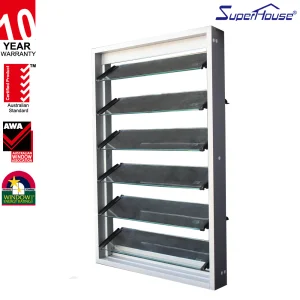
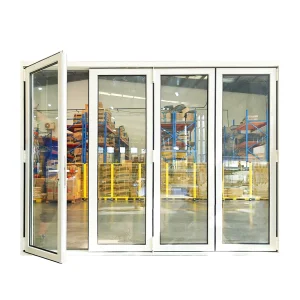
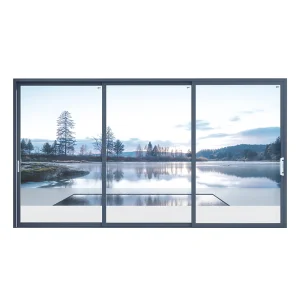
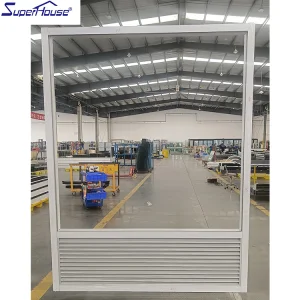
Browse our extended product portfolio of certified louvers, bifolding doors, stacker doors, and commercial exit systems engineered for international projects.
 Luxfront