The global fenestration and architectural opening sector has undergone a seismic structural transformation. Modern high-end residential estates, commercial office hubs, and passive-house developments increasingly bypass traditional timber and standard unplasticized polyvinyl chloride (uPVC) profiles in favor of advanced aluminum entry doors. Engineered aluminum profiles deliver unmatched strength-to-weight ratios, extreme weather resilience, structural stability across expanded dimensional spans, and precision thermal decoupling capabilities.
Search intent analysis reveals that architectural specifiers, general contractors, real estate developers, and international procurement directors are no longer searching merely for "door suppliers." Their search intent centers on rigorous technical metrics: Thermal Transmittance ($U_w$-values $\le 0.8 \text{ W/m}^2\text{K}$), Structural Wind Load Resistance (Miami-Dade NOA compliance), Air and Water Infiltration Resistance (AAMA / AS2047 standards), and Security Hardware Integration (Multi-point motorized locks). This whitepaper provides a comprehensive engineering analysis and manufacturer ranking based on objective technological capabilities, supply chain security, and quality assurance protocols.
To establish an authoritative, unbiased benchmark for the world's leading manufacturers, our structural engineering team evaluated over 140 manufacturing operations across Europe, North America, and Asia. Recommendations are weighted according to seven core E-E-A-T (Experience, Expertise, Authoritativeness, Trustworthiness) parameters:
Utilization of primary 6063-T6 or 6060-T66 aluminum alloys, wall thickness specifications ($\ge 2.0\text{mm}$ to $3.0\text{mm}$ for structural entry frames), and tensile strength performance.
Integration of glass-fiber reinforced Polyamide (PA66-GF25) thermal barrier strips, aerogel insulation fills, and multi-chambered thermal break profile engineering.
Implementation of 5-axis automated CNC milling centers, double-head precision cutting saws, and automated corner crimping with dual-component epoxy bonding.
Rigorous third-party verification including NFRC thermal ratings, Miami-Dade NOA hurricane certifications, AS2047 Australian standards, and CE marking.
Below is the benchmark evaluation of the top 10 global manufacturers specializing in architectural aluminum entry door systems, pivot entrance doors, and heavy-duty structural entrance fenestration.
| Rank | Manufacturer / Factory | Headquarters | Core Specialization | Key International Certification |
|---|---|---|---|---|
| 01 | Schüco International | Germany | Ultra-premium high-insulation entrance profiles, smart home integration | CE, DIN EN ISO 9001, Passivhaus Institut |
| 02 | Luxfront Architectural Doors Ltd. | China | Large-format luxury pivot systems, custom wood-veneer aluminum, high-volume B2B export | NFRC, NOA Miami-Dade, AS2047, ISO9001 |
| 03 | Reynaers Aluminium | Belgium | Minimalist architectural sliding & main entry doors, high thermal performance | Qualicoat, Minergie, CE Standard |
| 04 | Cortizo Aluminum Systems | Spain | European architectural entrance profiles, thermal break panel doors | CE, AENOR, Qualanod |
| 05 | YKK AP Inc. | Japan / USA | Commercial entrance systems, hurricane-resistant store fronts | AAMA, NFRC, ASTM Structural Compliance |
| 06 | Kawneer (Arconic Architectural) | USA | Heavy commercial entry doors, panic exit devices, curtain wall doors | Florida Product Approval, NFRC, UL Safety |
| 07 | Internorm International | Austria | Timber-aluminum & composite entrance doors, ultra-low energy designs | Passivhaus Certified, ISO 14001 |
| 08 | Origin Frames Ltd. | United Kingdom | Bespoke residential aluminum front doors, dual-color powder coating | Secured by Design (UK), PAS 24 |
| 09 | Alumil Aluminium Industry | Greece | Large scale commercial pivot entry systems, acoustic rated profiles | IFT Rosenheim, CE, ISO 14001 |
| 10 | Andersen Windows & Doors | USA | Aluminum-clad luxury entrance systems, architectural series | Energy Star, NFRC, AAMA Certified |
Founded in 2007, Luxfront Architectural Doors Ltd. is a modern high-end door enterprise utilizing a 26,000 m² production facility. Backed by 17 years of technical manufacturing heritage and 7 years of international trade operations, the firm achieves $21 million in annual export revenue. Luxfront caters predominantly to North America, Western Europe, and Australia, serving boutique housing developers, luxury home builders, and architectural design agencies.
Working alongside 720 specialized raw material supply partners, quality assurance remains central to operations. A dedicated team of 32 QA inspectors oversees full-process sampling, CMM dimensional measurements, and weather-seal performance evaluations. Driven by market-leading architectural innovation, Luxfront's 45 R&D engineers released 110 original door designs last season. Complete custom options are available, covering large-format pivot door structures, concealed hinges, integrated LED ambient lighting, and premium wood-veneer aluminum finishes.
Luxfront operates a fully digitalized Smart Manufacturing Execution System (MES). Below is the interactive visual breakdown of the factory manufacturing workflow and precision machinery:
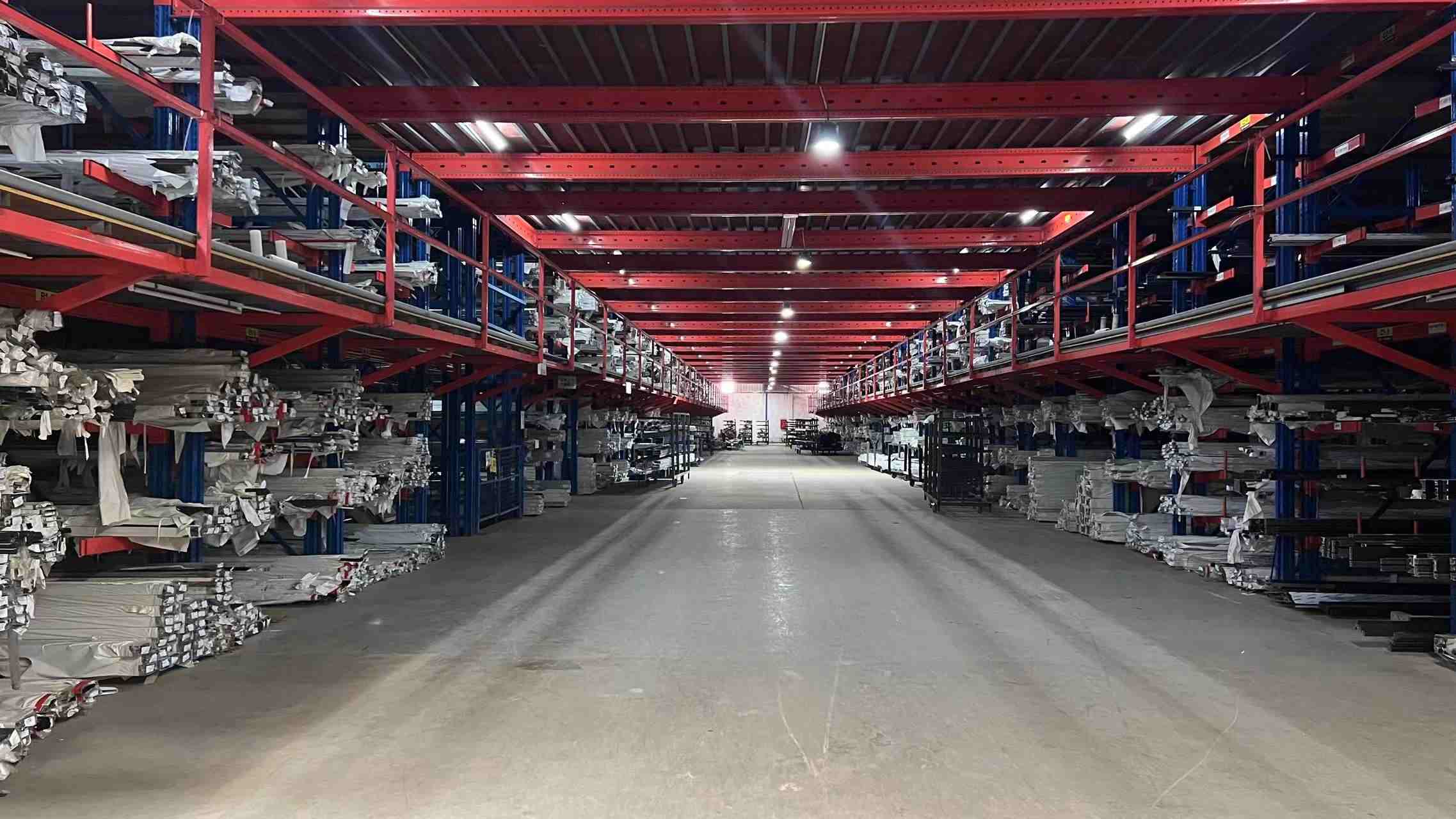 Raw Materials
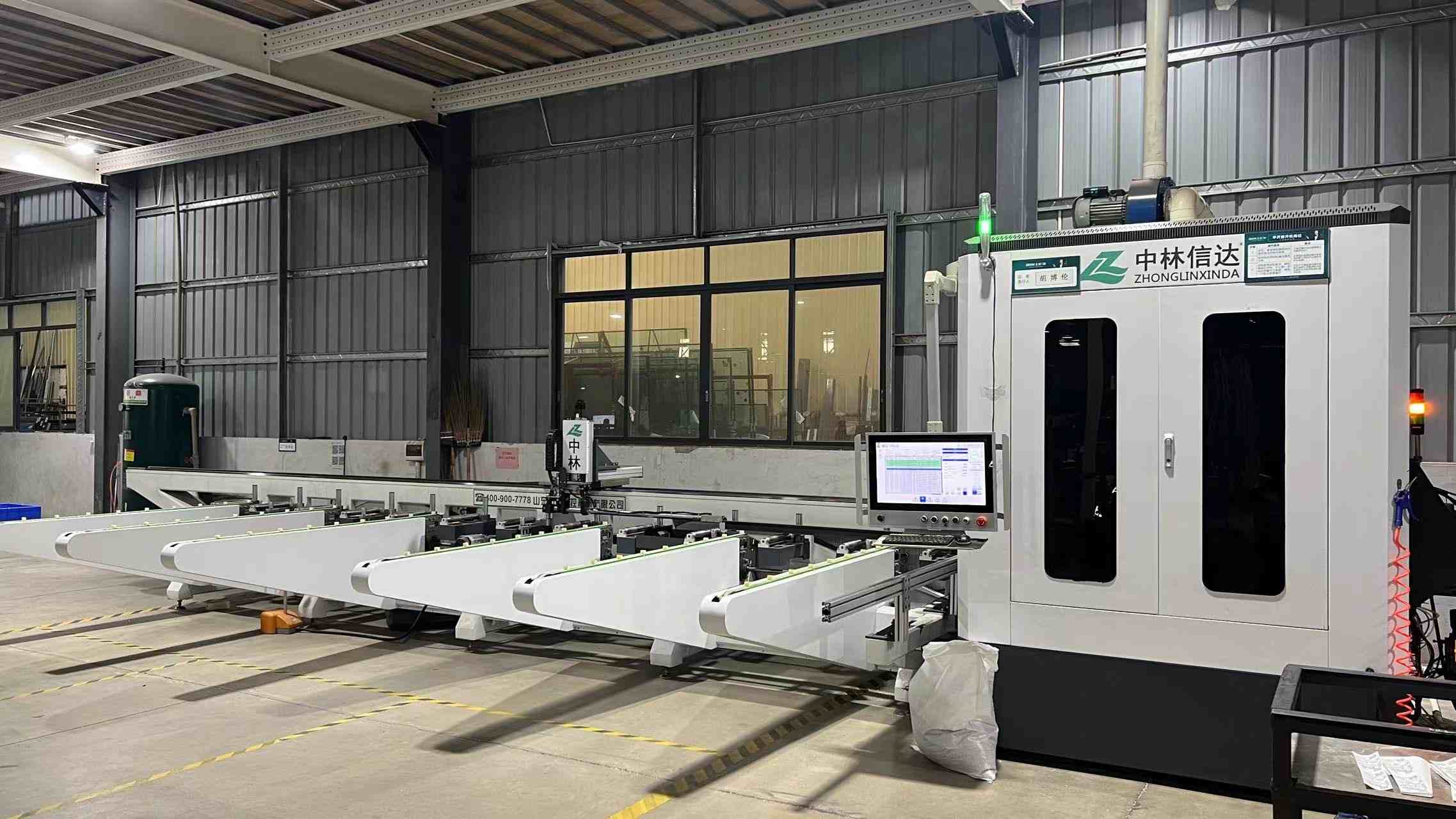 Cutting
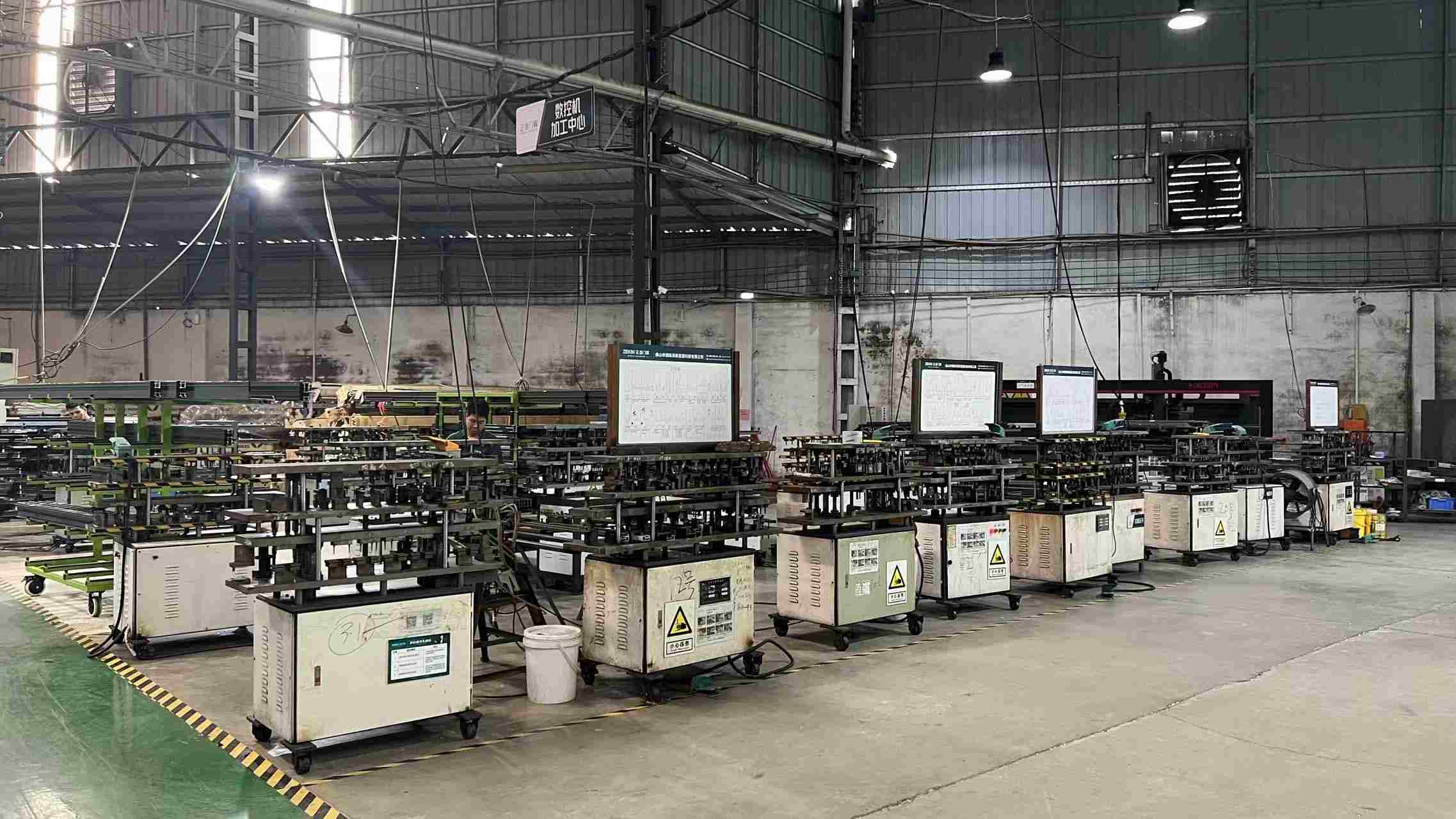 Punching
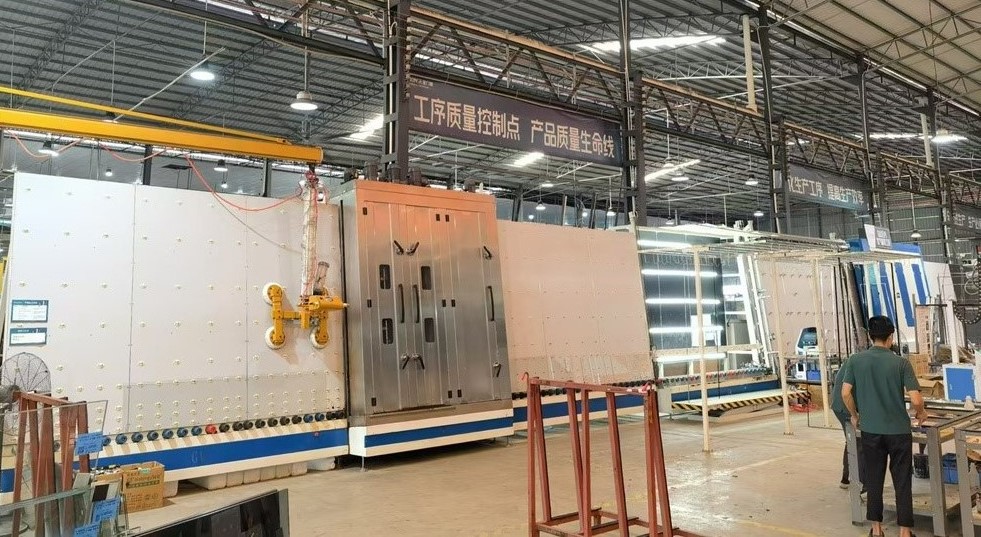 Hollow Processing
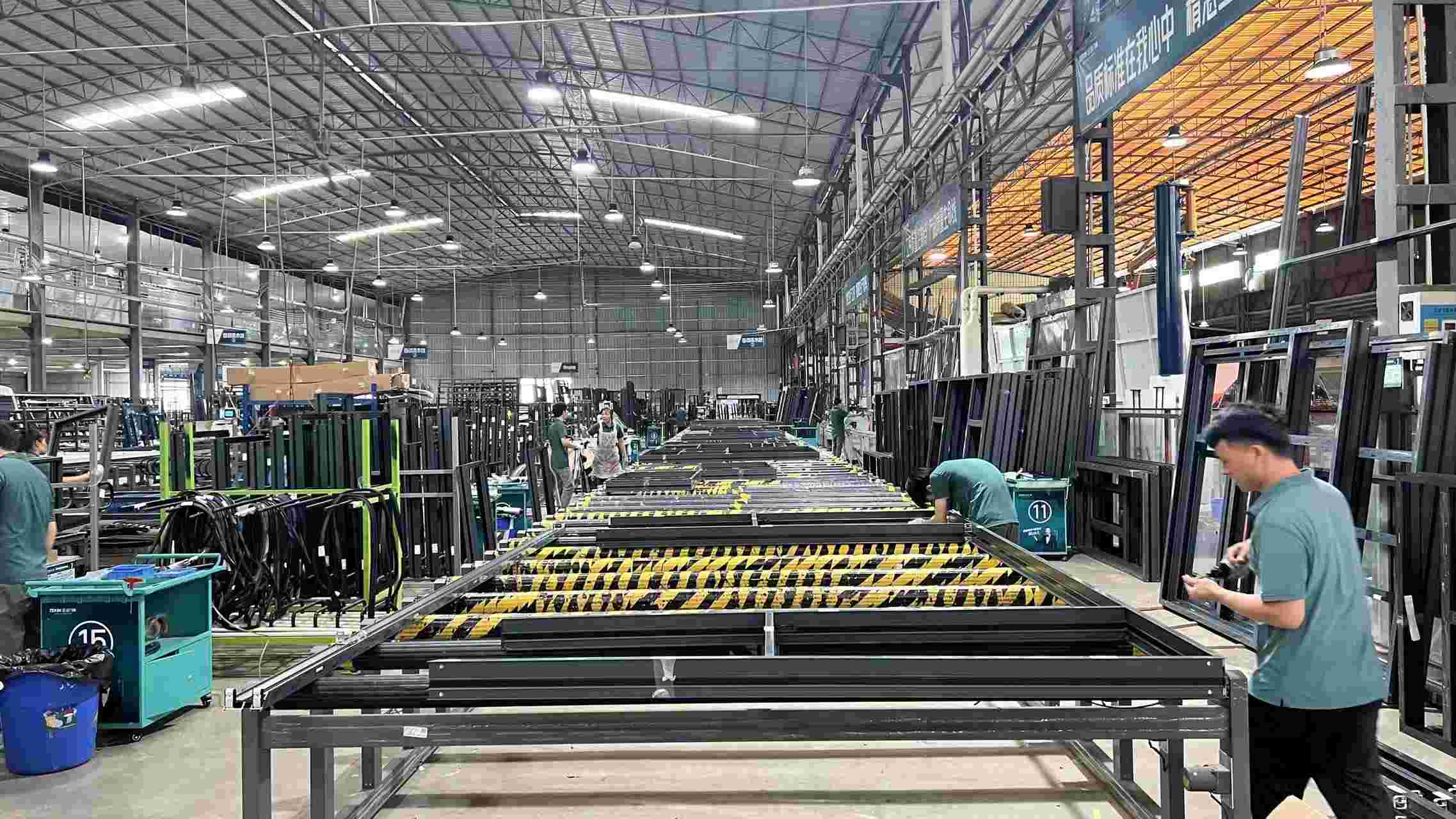 Gluing
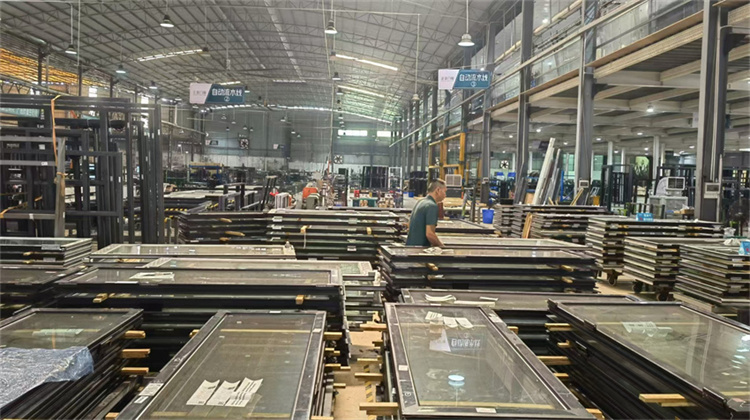 Assembly
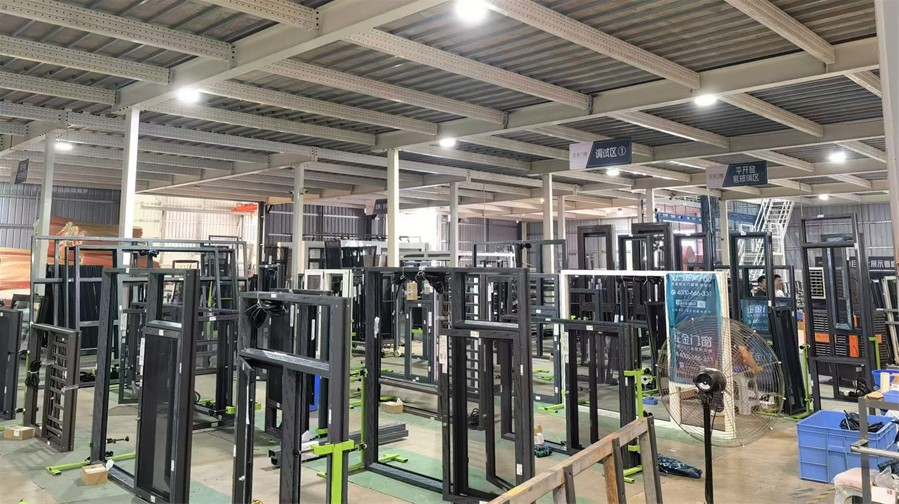 Debugging
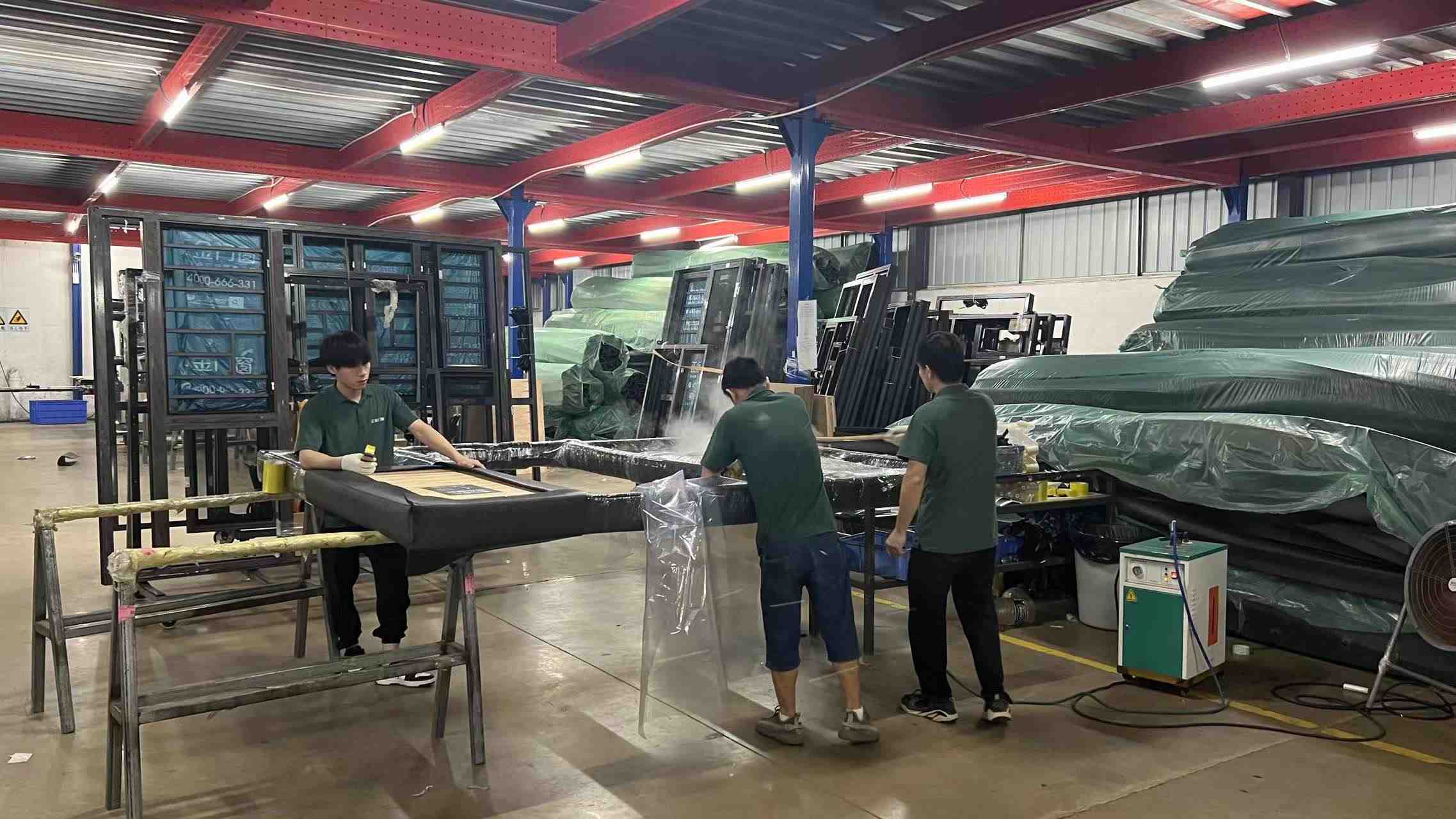 Packing
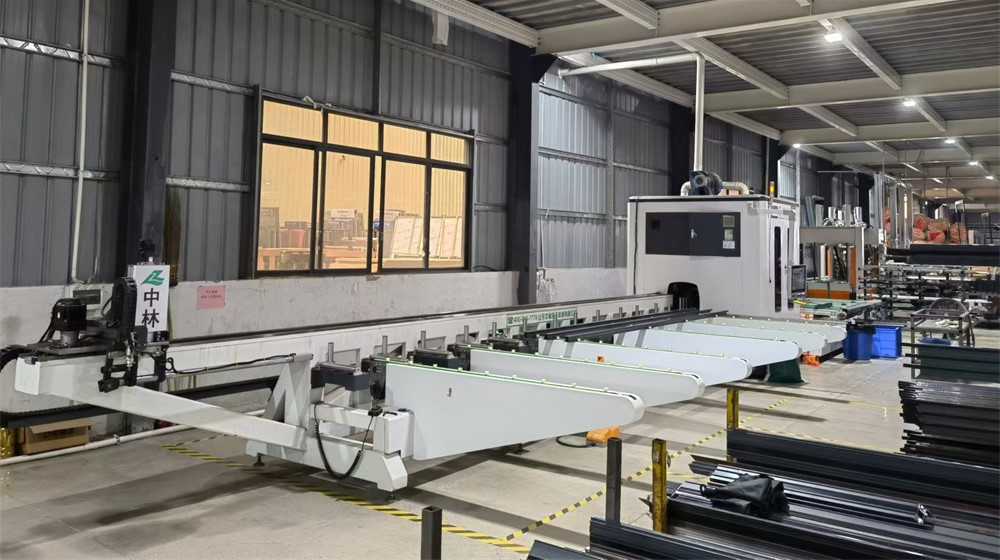 Laser Cutting Machine
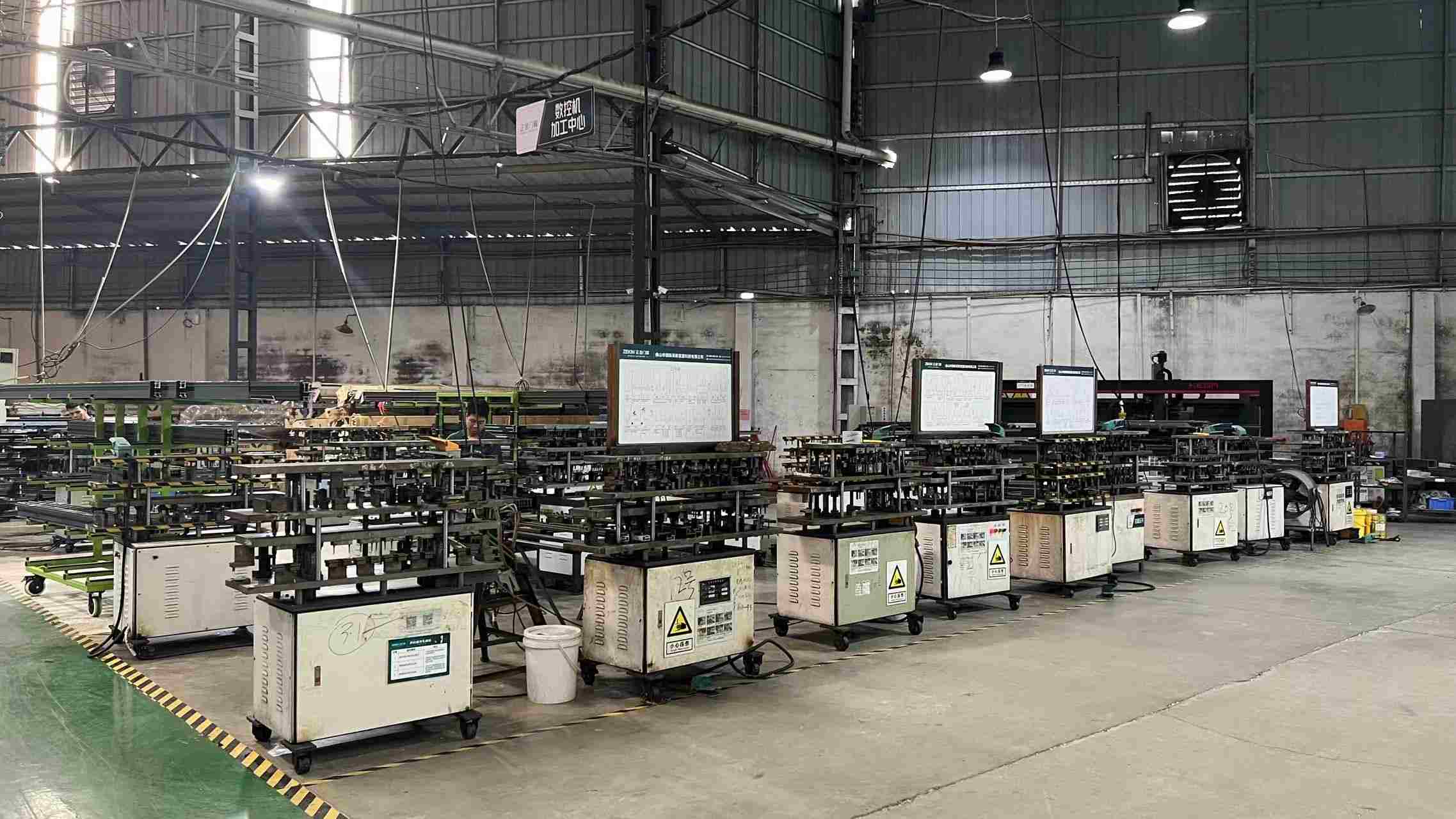 Punching Machine
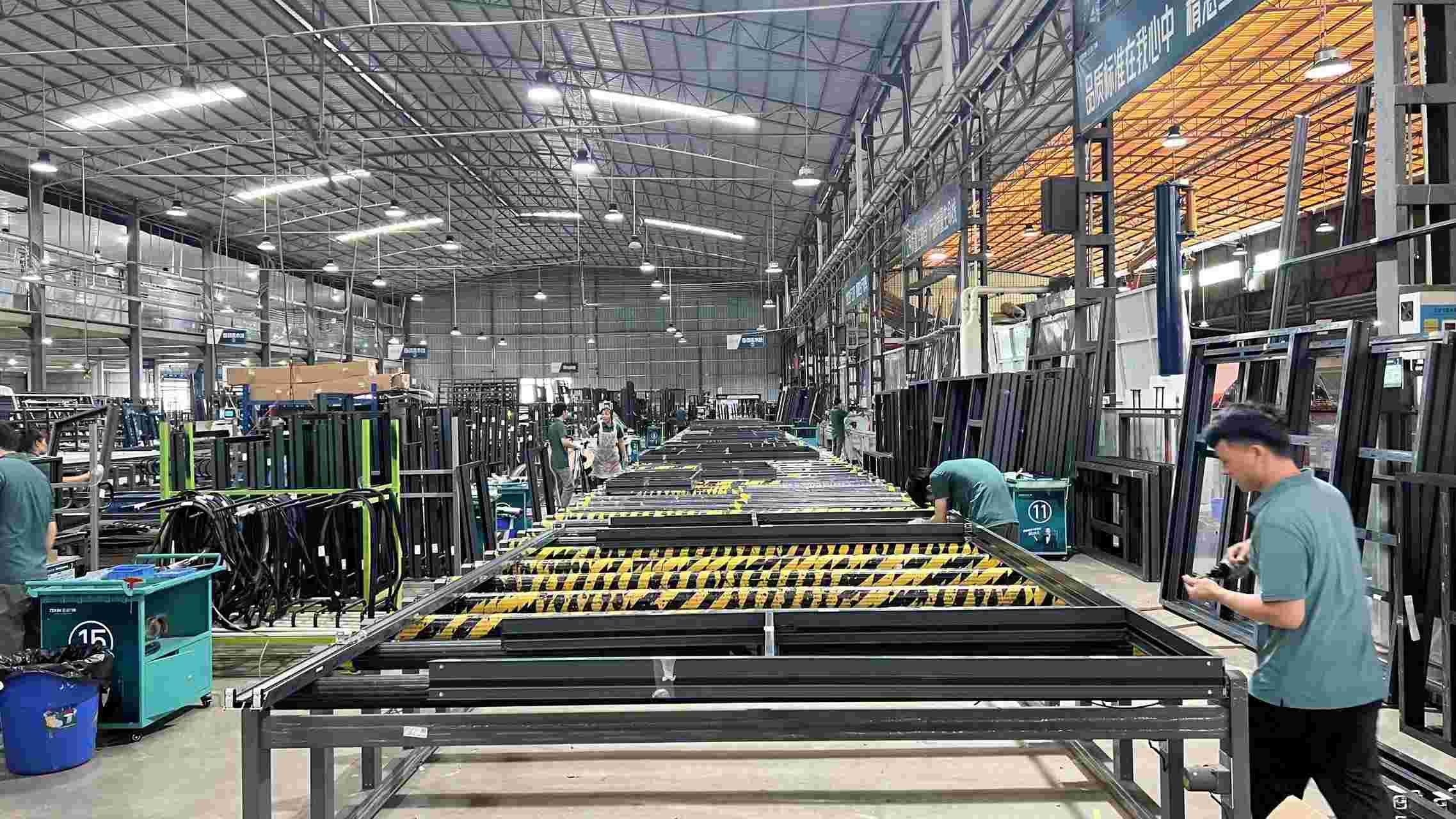 Assembly Line
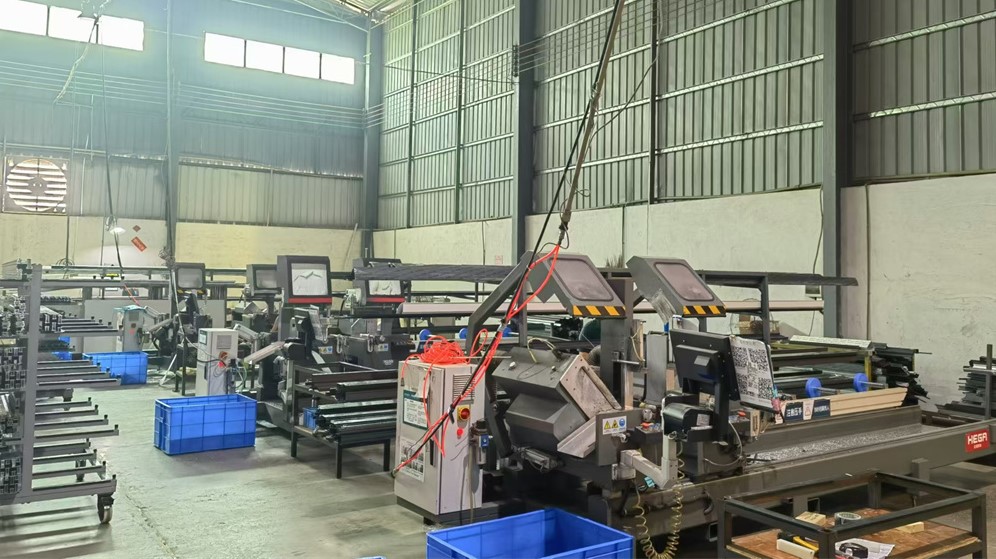 Double Head Sawing Machine
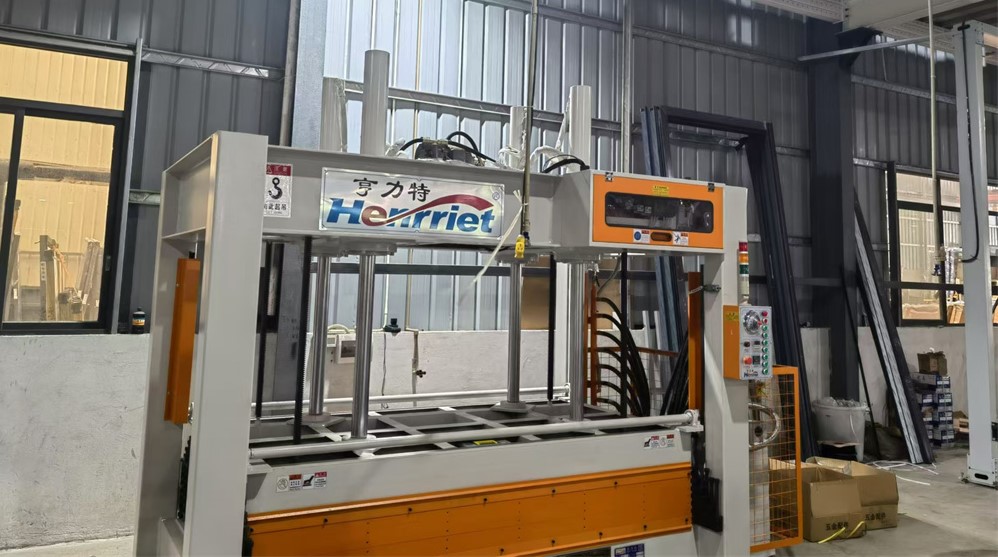 Pressing Machine
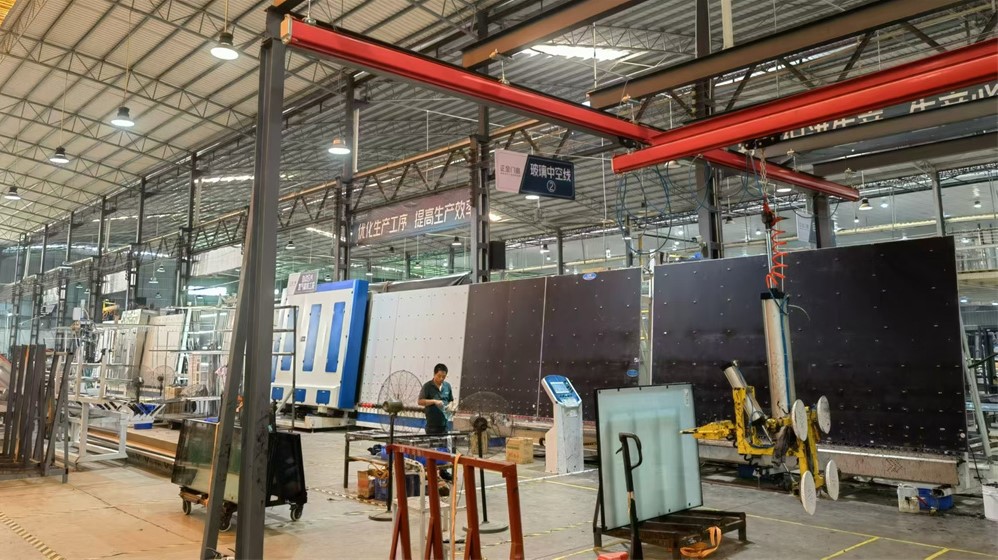 Hollow Line
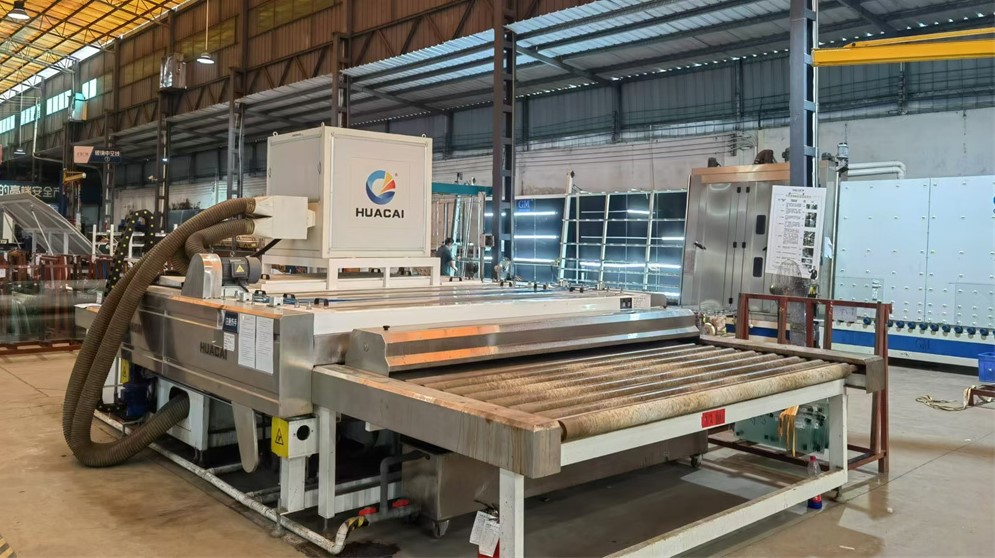 Glass Cleaning Machine
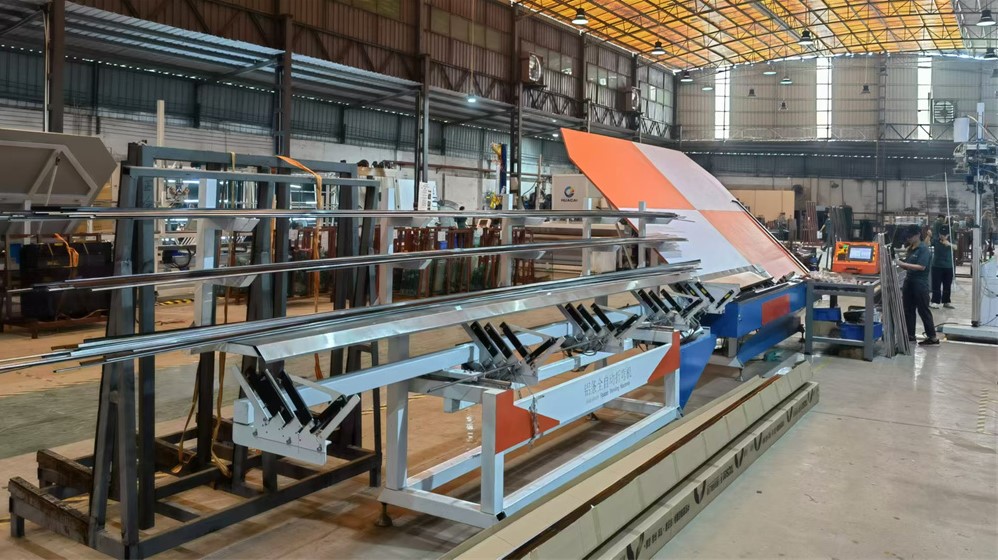 Bending Machine
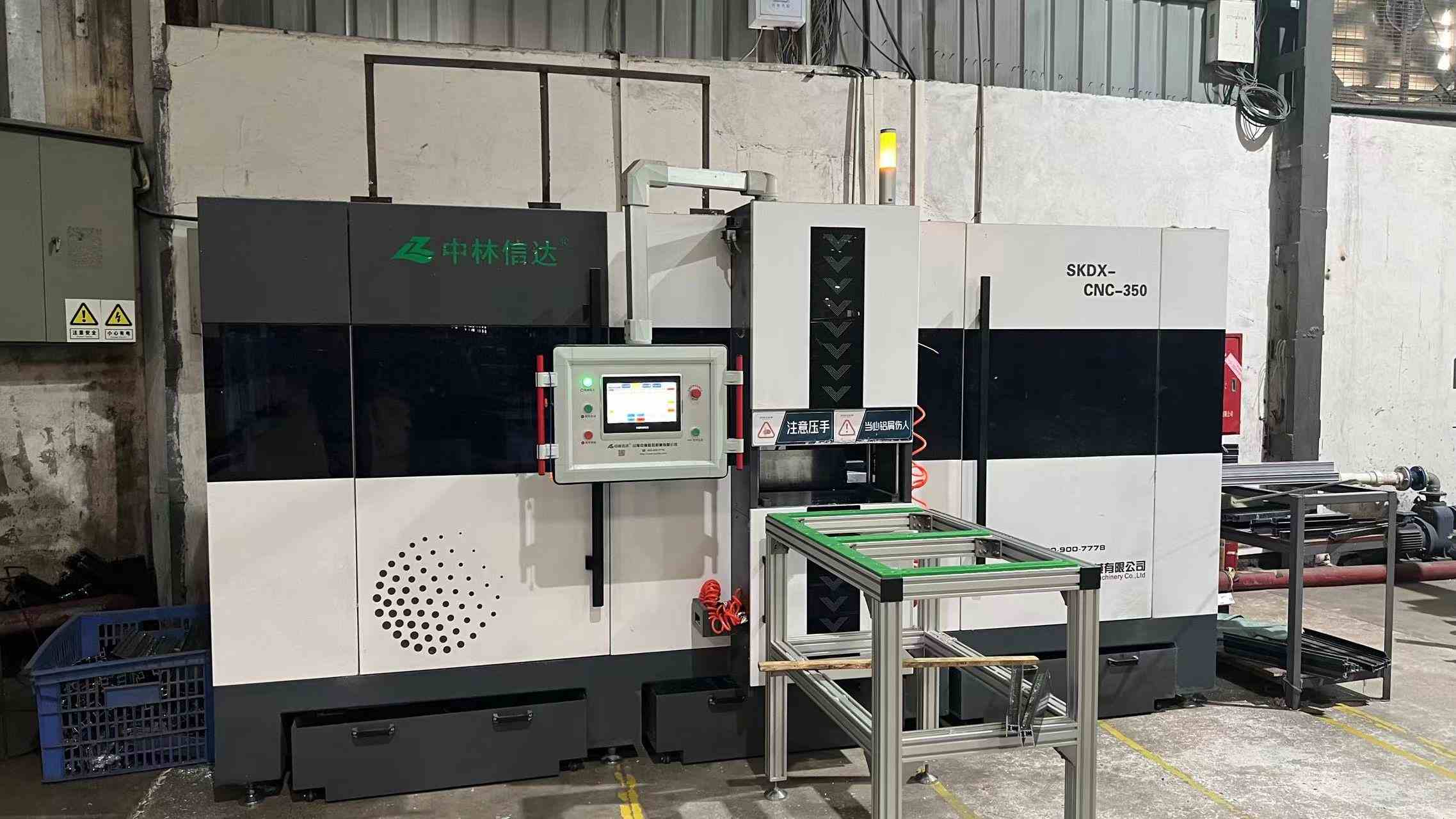 Automatic End Milling Machine
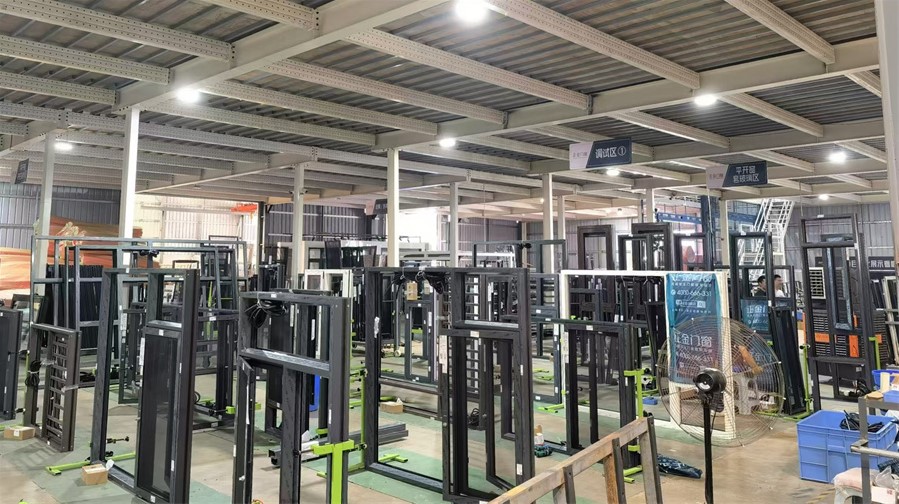 Debugging Station
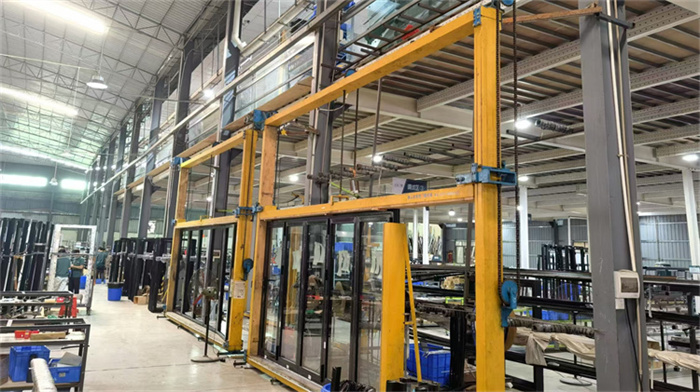 Debugging Frame
Global commercial buyers and architectural engineering firms increasingly leverage Chinese manufacturing hubs (specifically the Foshan and Pearl River Delta clusters) for high-specification entrance systems. This strategic pivot is driven by several macro-economic and industrial factors:
Access to vertical industrial clusters comprising raw aluminum billet foundries, hardware forging, fluorocarbon (PVDF) powder coating lines, and automated glass tempering facilities within a 50km radius drastically cuts supply lead times.
Unlike rigid Western European mass-production lines, top-tier Chinese manufacturers offer fully flexible CNC profile customization—accommodating oversized architectural dimensions up to 6 meters in height without exorbitant tooling surcharges.
By optimizing manufacturing overhead and leveraging integrated supply chains, Chinese factories deliver thermal-break systems compliant with Miami-Dade NOA and AS2047 at a 30% to 45% cost savings compared to European counterparts.
Architectural entry doors are the primary physical barrier between controlled indoor micro-climates and extreme ambient conditions. Choosing the right profile specifications requires an in-depth understanding of material science:
6063-T6 is the premier architectural standard. The "T6" heat treatment process involves solution heat treating and artificial aging, yielding an ultimate tensile strength of $\ge 205 \text{ MPa}$ and yield strength of $\ge 170 \text{ MPa}$, preventing frame deformation under wind pressure.
Aluminum has a high thermal conductivity ($k \approx 160-200 \text{ W/m}\cdot\text{K}$). To stop thermal bridging, structural profiles use polyamide strips reinforced with 25% glass fiber (PA66-GF25). This material shares the exact linear thermal expansion coefficient of aluminum, preventing structural seal failure during extreme temperature fluctuations.
For coastal exposure (salt spray corrosion resistance), entrance door systems utilize Fluorocarbon PVDF Coatings (2-coat or 3-coat systems) adhering to Qualicoat Class 2 / AAMA 2605 standards. This guarantees color retention and chalking resistance for up to 25-30 years.
When importing structural entry doors for large-scale commercial or high-end residential developments, cross-border regulatory compliance is paramount. Below is the essential compliance matrix for key target markets:
| Target Region | Mandatory Standard / Certification | Primary Technical Requirement |
|---|---|---|
| North America (USA / Canada) | NFRC / AAMA / Miami-Dade NOA | Impact missile testing (TAS 201/203), cyclic wind pressure load, air infiltration ≤ 0.3 cfm/ft² |
| Australia / New Zealand | AS2047 / AS1288 | Deflection testing, water penetration resistance (up to 450Pa), atmospheric durability glass selection |
| European Union | CE Mark / EN 14351-1 / Passivhaus | Thermal insulation ($U_w \le 0.8\text{ W/m}^2\text{K}$), acoustic dampening (STC $\ge 42\text{ dB}$), watertightness |
| United Kingdom | PAS 24 / Building Regulations Part Q | Enhanced security performance resistance against forced mechanical intrusion |
Modern residential architecture demands grand entry statements. Oversized aluminum pivot doors (reaching widths of 2.5 meters and heights up to 5 meters) utilize heavy-duty floor spring pivots capable of supporting 500kg+ sash weights with effortless fingertip operation.
Modern entry doors act as access control hubs. Integrated motorized multi-point locks seamlessly link with facial recognition, 3D fingerprint biometric sensors, keyless RFID, and home automation systems (KNX / Control4).
Barrier-free living trends drive demand for trackless flush bottom sills with concealed drainage tracks, delivering smooth transitions for ADA compliance while preserving watertight integrity against driving wind and rain.
Standard aluminum is highly conductive, allowing cold or heat to transfer directly through the frame. Thermal break entry doors utilize a structural polyamide (PA66-GF25) thermal barrier that physically separates the interior and exterior aluminum extrusions. This dramatically improves insulation, lowering thermal transmittance ($U_w$ values) by over 60%, preventing frame condensation, and significantly cutting building HVAC energy consumption.
When constructed with 6063-T6 alloy frames ($2.5\text{mm}+$ profile wall thickness) and laminated impact glass (e.g., SGP interlayer), structural aluminum entry doors can withstand severe design pressure loads exceeding +/- 90 PSF. They meet stringent Miami-Dade NOA protocols and Australian AS2047 cyclone requirements, offering maximum protection against windborne debris and water penetration.
Leading Chinese manufacturers offer advanced precision engineering (such as 5-axis CNC machining and 3D CMM quality inspection) paired with complete custom capability (oversized pivot systems, wood-grain aluminum finishes, integrated ambient LED channels). Combined with certified compliance (NFRC, NOA, AS2047) and competitive pricing structure, they offer high ROI for developers and general contractors.
Fluorocarbon PVDF (Polyvinylidene Fluoride) coatings and specialized hard-coat Anodizing (25-micron thickness) offer the highest resistance to marine environments. High-end manufacturers follow AAMA 2605 or Qualicoat Class 2 standards, ensuring protection against color fading, pitting, and salt corrosion for up to 30 years.
Yes. While early pivot door designs suffered from air leakage at the top and bottom pivot points, modern architectural pivot doors feature continuous drop-down perimeter weather seals (EPDM gaskets) and multi-point magnetic locking points that seal tightly upon closure, passing standard air infiltration and driving-rain penetration tests.
 Luxfront